Quick Navigation
- Northern Michigan State Parks at a Glance
- Ludington State Park
- Hartwick Pines State Park
- Interlochen State Park
- Sleeping Bear Dunes National Lakeshore
- Silver Lake State Park
- Where to Stay Near These Parks
- Find Your Park Base Camp
- Frequently Asked Questions
- What is there to do in Ludington State Park?
- Does Ludington State Park have sand dunes?
- How much does it cost to enter Michigan state parks?
- Are dogs allowed in Michigan state parks?
- What is the best state park to visit near Traverse City?
- Can you swim at Michigan state parks?
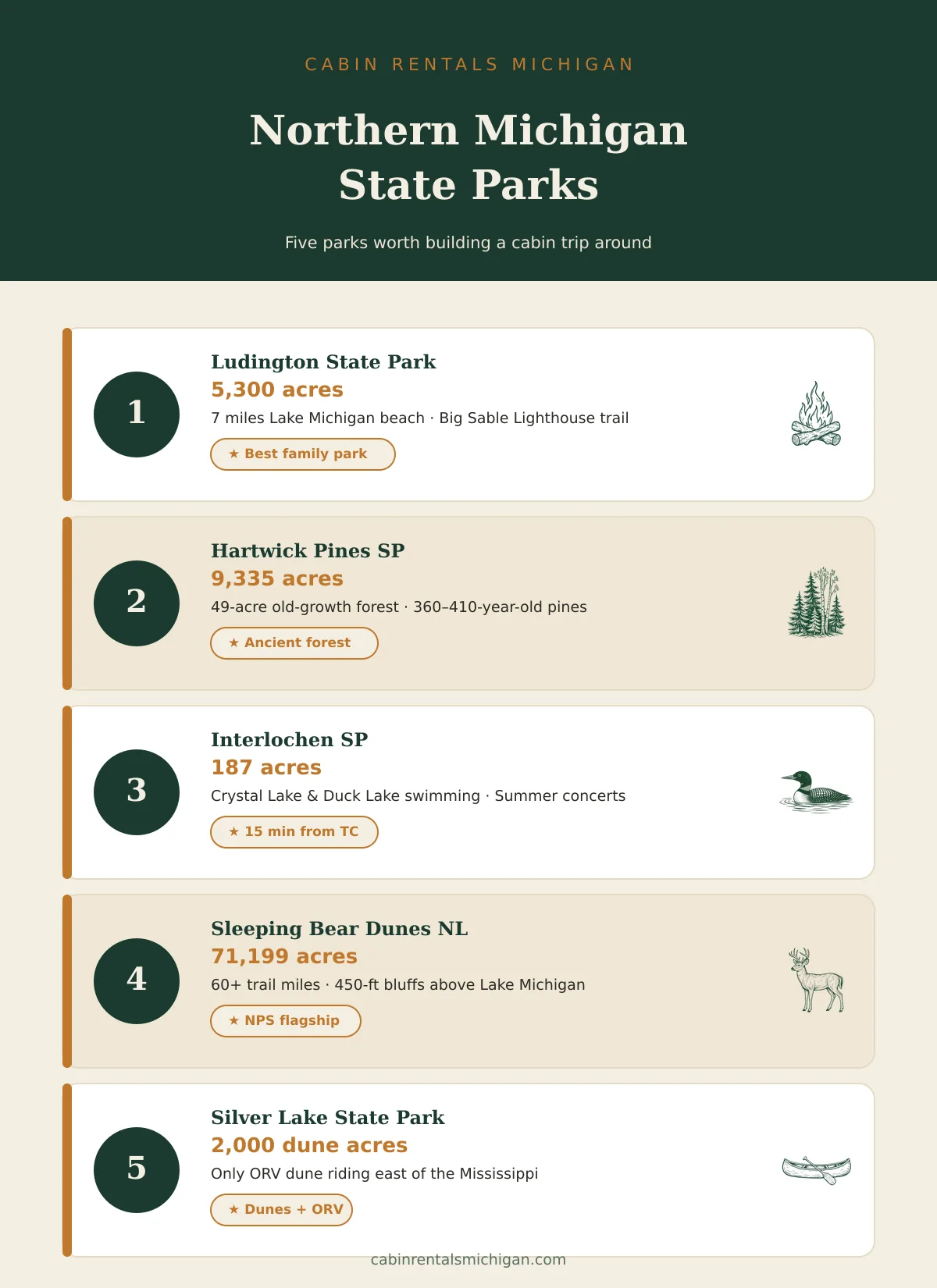
Northern Michigan state parks are the reason people keep coming back year after year. From a 5,300-acre wilderness on the Lake Michigan shore to ancient forests where white pines have stood for 400 years, the parks in the northern Lower Peninsula pack more variety into a long weekend than most regions manage in a road trip. This guide covers the standout parks worth building a cabin trip around, what you will actually find at each one, and the practical details that make the difference between a smooth visit and a frustrating one.
Northern Michigan State Parks at a Glance
| Park | Nearest Town | Acreage | Trail Miles | Top Draw |
|---|---|---|---|---|
| Ludington State Park | Ludington | 5,300 | 21 | Big Sable Lighthouse + Lake Michigan beach |
| Hartwick Pines State Park | Grayling | 9,335 | 21 | 49-acre old-growth white pine stand |
| Interlochen State Park | Interlochen | 187 | 2+ | Green Lake and Duck Lake swimming |
| Sleeping Bear Dunes NL | Glen Arbor | 71,199 | 60+ | 450-ft dunes + Lake Michigan overlooks |
| Silver Lake State Park | Hart | 2,000 (dunes) | — | Only motorized dune riding east of the Mississippi |
Ludington State Park
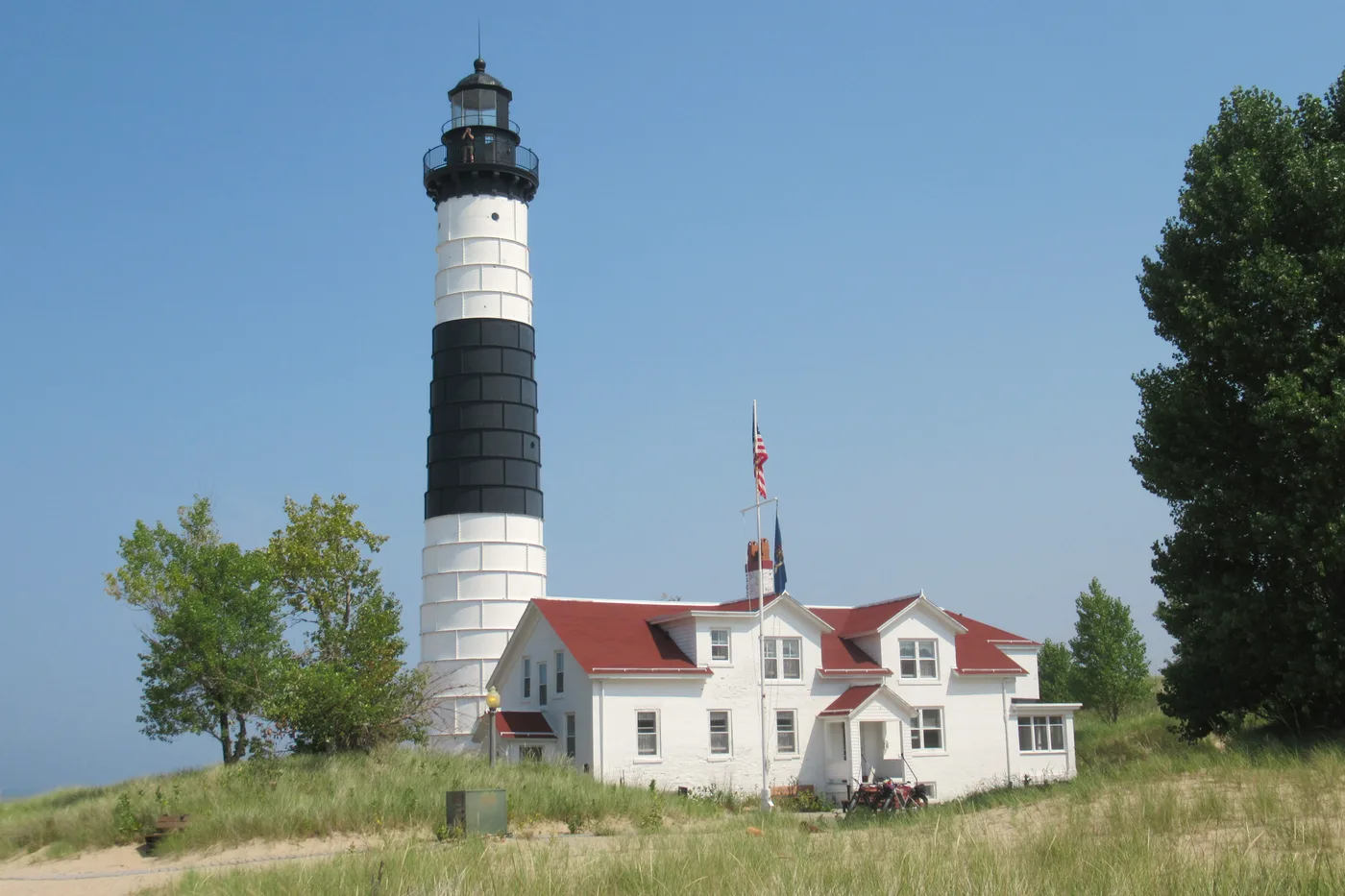
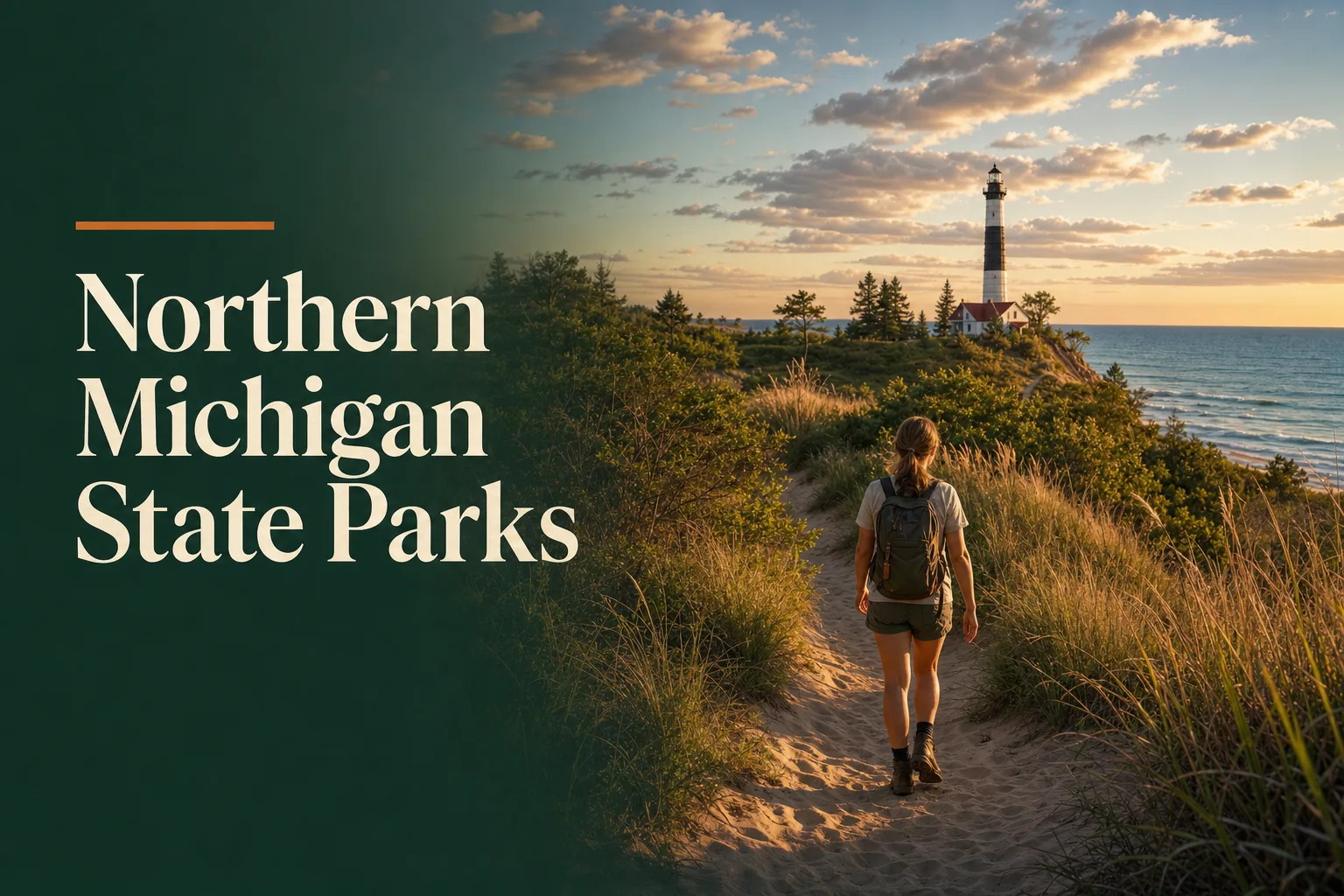
Ludington State Park sits where Hamlin Lake meets Lake Michigan, giving it two completely different water frontages and a staggering seven miles of unbroken Lake Michigan shoreline. The 5,300-acre park packs in 21 miles of marked hiking trails, 355 campsites across three modern campgrounds, and a beach house renovation that finished in 2025. It is consistently ranked among the best state parks in Michigan for the simple reason that it has almost everything in one place — dunes, forest, two lakes, and a lighthouse walk.
The most famous hike is the Lighthouse Path, a 1.8-mile (one-way) trail that runs north along the Lake Michigan shore to Big Sable Point Lighthouse. The black-and-white striped tower was built in 1867, stands 112 feet tall, and is open for climbing from May through October. The walk there and back passes through open dune, beach grass, and cedar forest — it is the most scenic mile-and-a-half in the park. Plan about two hours round trip at a relaxed pace.
Ludington State Park straddles both the northern and southern banks of a channel connecting Hamlin Lake to Lake Michigan. Hamlin Lake is the warmer, calmer option for swimming and paddling; the Lake Michigan side delivers the sunsets and surf.
Beyond the lighthouse trail, the Skyline Trail climbs the ridge between the two lakes for long views south across the dunes. The Logging Trail loops through second-growth forest and connects to the campground network. For families, the Hamlin Lake boat launch and canoe rentals make an afternoon on the water easy without bringing your own gear. To read more about Ludington as a base town, our Ludington travel guide covers the town, the beaches, and the S.S. Badger ferry.
Hartwick Pines State Park
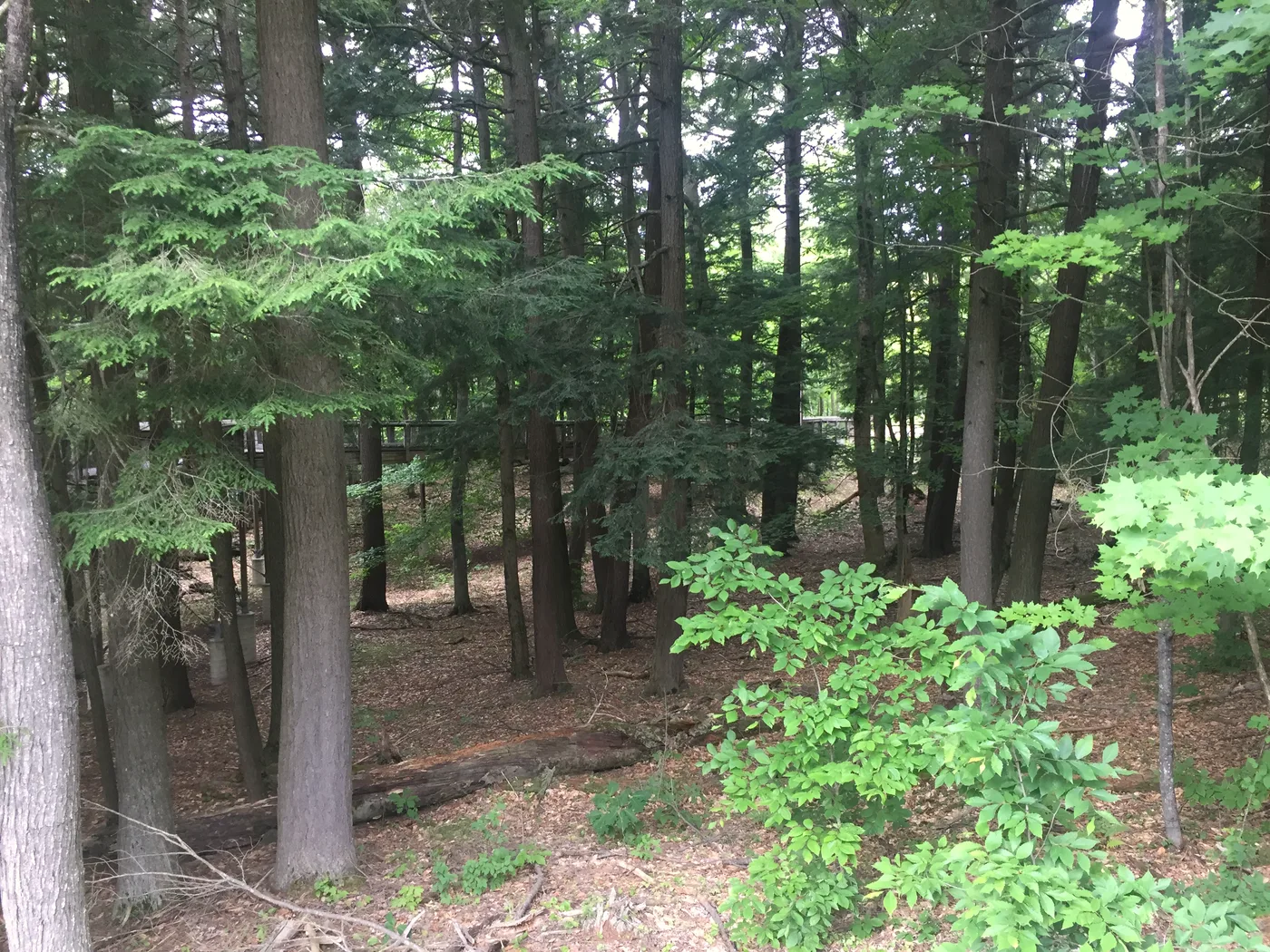
Seven miles northeast of Grayling, Hartwick Pines is the Lower Peninsula's cathedral of old-growth forest. The park's 49 acres of ancient white pines — trees over 300 years old, reaching up to 130 feet — survived the 19th-century logging era by a combination of geography and luck. Standing beneath them feels genuinely different from any other forest in the state. The Old Growth Forest Trail is 1.25 miles, paved, and accessible; it is the obvious reason to visit, but the surrounding 9,335-acre park has 21 miles of additional trails and the Michigan Forest Visitor Center, which documents the logging era that cleared nearly every other tree in the state.
The Mertz Grade is a flat 4-mile trail following an old logging railroad grade through regenerated forest — it is the best option for an easy half-day hike if the old-growth loop feels short. The park also borders the Au Sable River's main branch, making it a natural stop for anyone combining a Hartwick Pines visit with a canoe trip downstream toward Grayling.
Hartwick Pines draws large school groups on weekday mornings in spring and fall. Arrive by 9 AM or after 2 PM in May and September to have the old-growth loop to yourself. Weekends in June and July are your best bet for uncrowded early mornings.
Interlochen State Park
Interlochen State Park occupies a narrow strip of land between two lakes — Green Lake and Duck Lake — just 15 miles southwest of Traverse City. At 187 acres it is compact, but it punches well above its size in terms of setting: the big pines along the Green Lake shore are some of the most photographed trees in the area, and the campgrounds here book up fast. Interlochen is best thought of as a swimming-and-camping park rather than a hiking destination. The water at both Green Lake and Duck Lake warms earlier than Lake Michigan and stays swimmable from late June through August.
The park is directly adjacent to the Interlochen Center for the Arts, which runs a full summer season of performances from June through August, most of them open to the public and reasonably priced. A night at the park plus a concert under the pines is a combination that holds up year after year for families and couples alike.
Sleeping Bear Dunes National Lakeshore
Strictly speaking, Sleeping Bear Dunes is a National Lakeshore, not a state park — it is managed by the National Park Service rather than the Michigan DNR. That distinction matters for the entry fee ($25 per vehicle for a 7-day pass, covered by the America the Beautiful pass). In every other practical sense, it functions like the region's flagship park. The 71,199-acre lakeshore stretches 35 miles along Lake Michigan through Leelanau and Benzie counties, puts 450-foot sand bluffs directly above the water, and runs more than 60 miles of trail through beech-maple forest, open dune, and old farmland.
The Dune Climb off M-109 is the signature experience: a steep wall of sand leads up to a ridge, and the trail continues 1.5 miles further to the Lake Michigan shore. Most first-timers climb to the ridge and turn back; the full round trip to the water and back is three to four hours and genuinely difficult in warm weather. The Empire Bluff Trail is a better choice for people who want the Lake Michigan overlook without the dune suffering — it is 1.5 miles round trip on a wooded path that opens dramatically onto the bluff at the end. The park sits about 40 minutes west of Traverse City, making it an easy day trip from a TC cabin. We have a full trail breakdown in our Sleeping Bear Dunes hiking guide.
Watch: Michigan State Parks Overview
Video: Michigan state parks by Michigan DNR on YouTube.
Silver Lake State Park
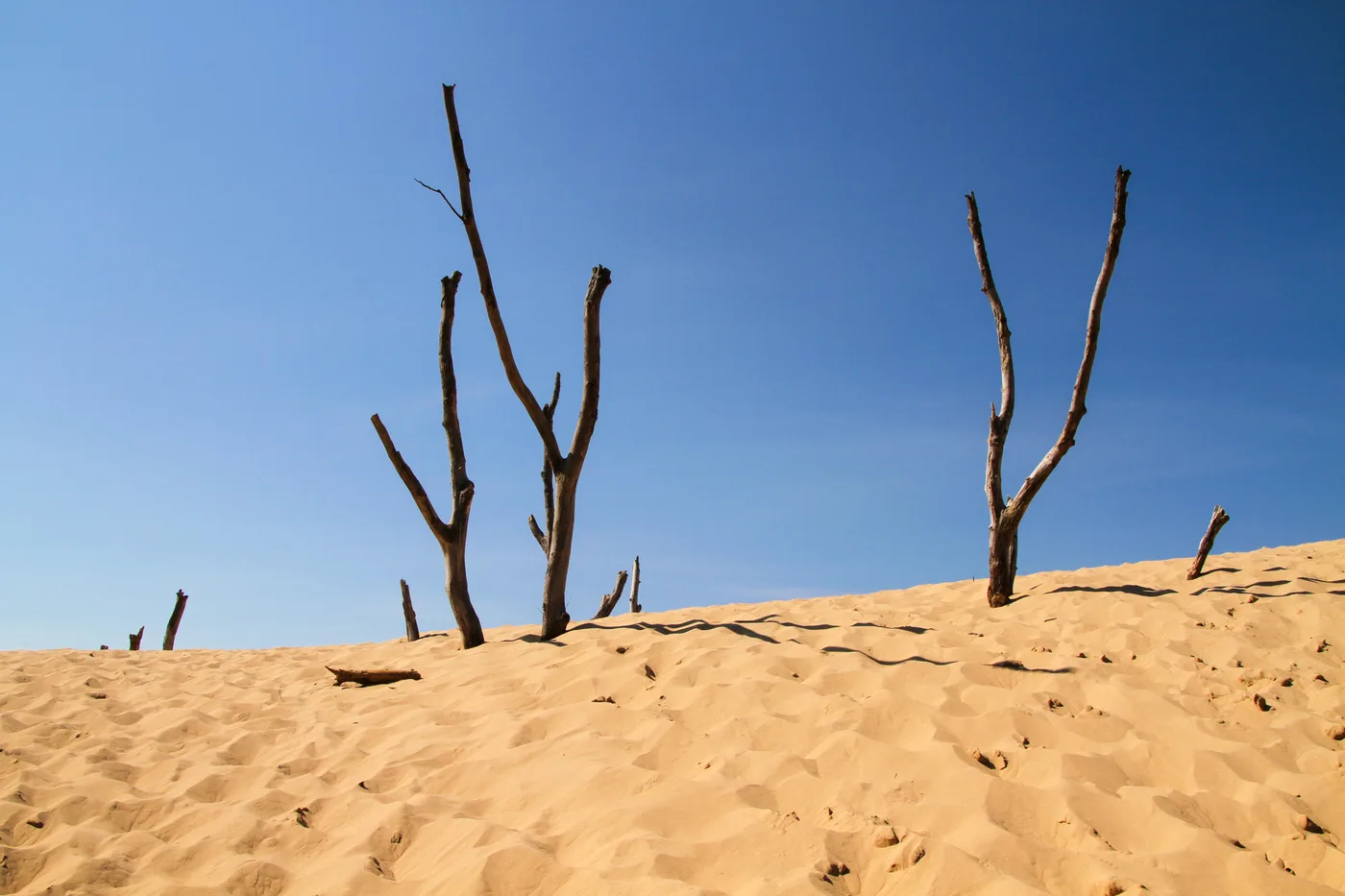
Silver Lake State Park is a different beast from every other park on this list. Yes, it has a natural lake, a Lake Michigan beach, and a campground — but the thing that draws dedicated visitors from across the Midwest is the 450-acre open dune area where licensed ORVs are permitted. From April through October, the Silver Lake dunes are the only place east of the Mississippi River where you can legally ride an ATV or ORV on open sand. Rentals are available at the dune entrance if you do not bring your own.
Non-ORV visitors have the Mac Wood's Dune Rides (guided tours in open-air vehicles) and the walk-in dune access on the north side of the park, which gives you the scenery without the noise. The campground fills weeks in advance in summer — reservations at the DNR's Recreation.gov portal are essential. For a deeper dive into Silver Lake, including the drive-on-the-dunes specifics, our Silver Lake dunes guide has full details.
Michigan state park entry requires a Recreation Passport, purchased at vehicle registration renewal or at the park gate. Pricing adjusts annually with inflation — check the Michigan DNR website for current rates. A single-day vehicle pass can be purchased at the park entrance. The America the Beautiful annual pass covers National Lakeshore entry (Sleeping Bear) but does NOT cover DNR state parks.
Where to Stay Near These Parks
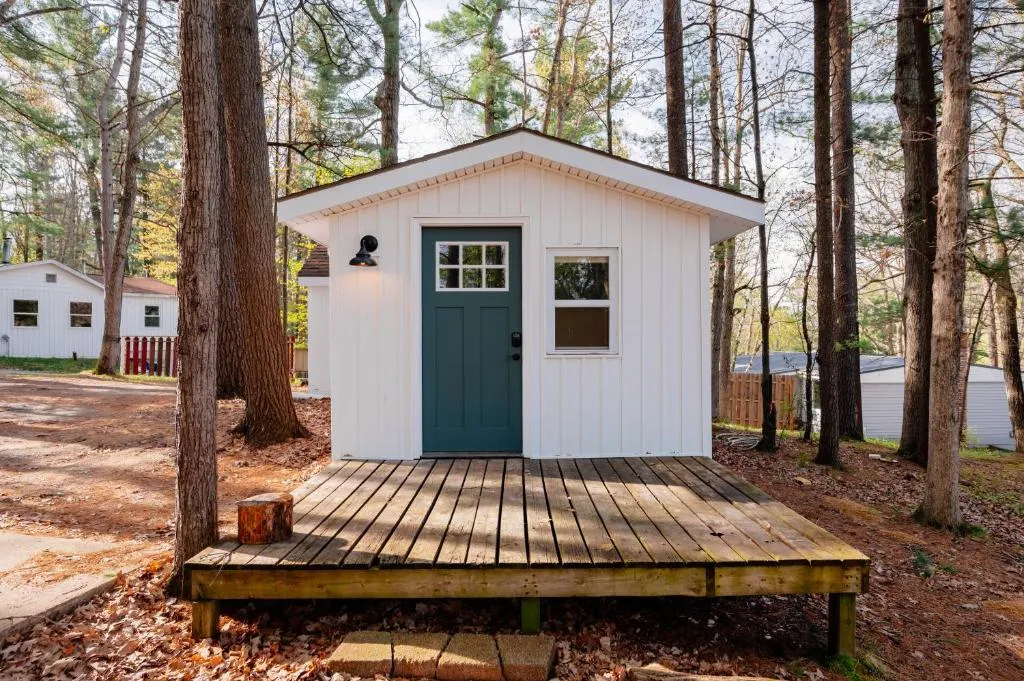
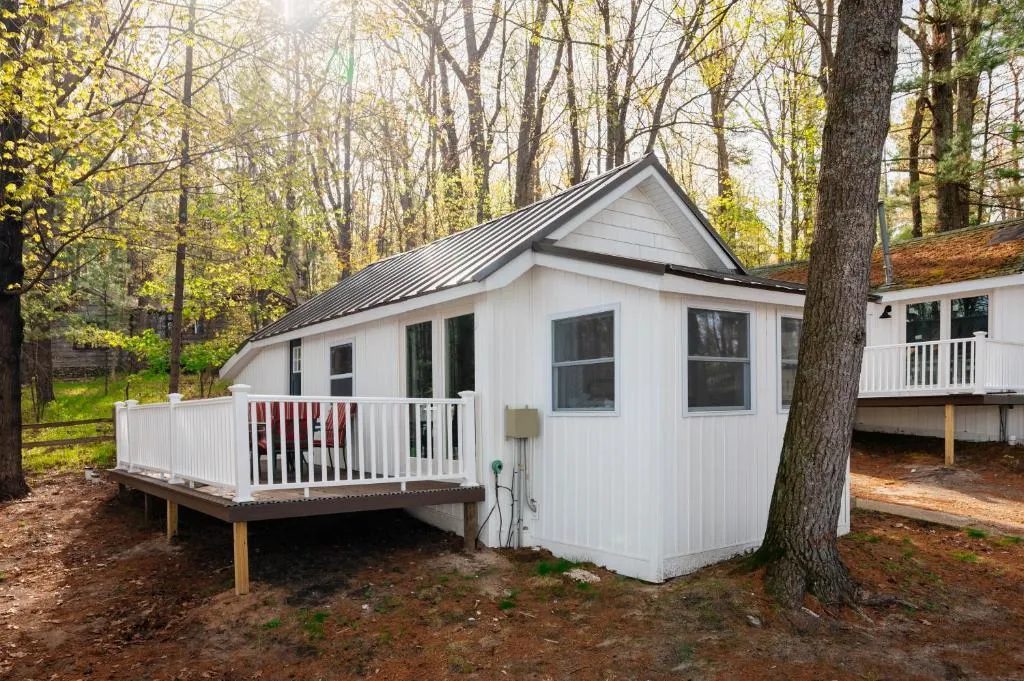
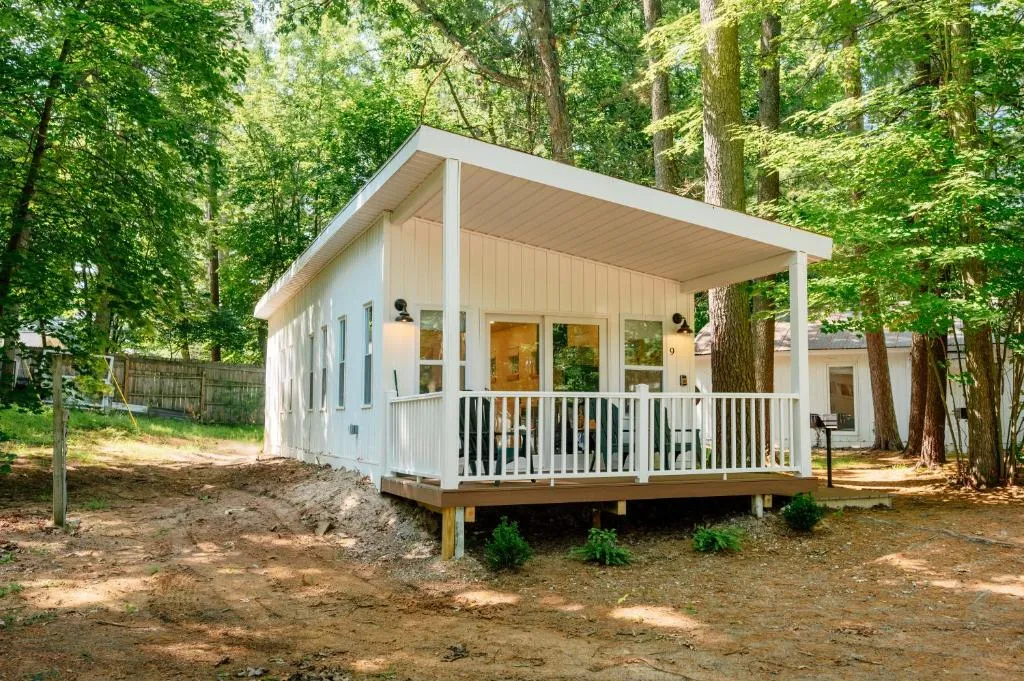
Traverse City is the most practical home base for day-tripping to Sleeping Bear Dunes, Interlochen, and Hartwick Pines — Sleeping Bear Dunes and Interlochen are both within 45 minutes, and Hartwick Pines is about an hour south near Grayling. For Ludington and Silver Lake, plan a westward road trip with a couple of nights in a lakeside cabin. The cabins below are among the highest-rated on the site and sit within easy reach of the parks.
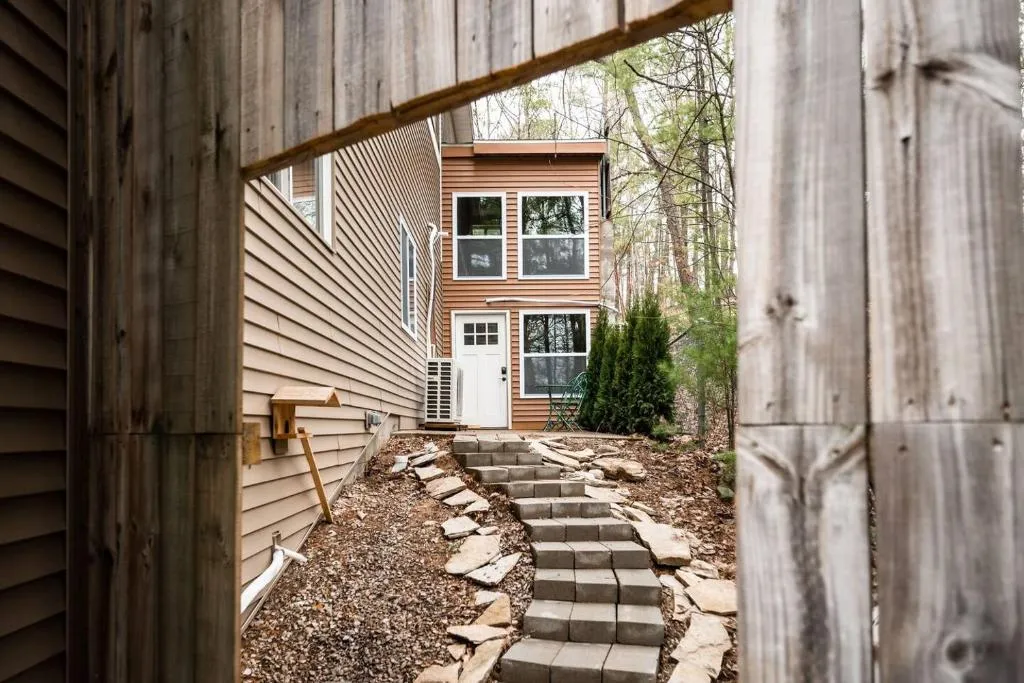
Find Your Park Base Camp
Browse lakeside and woodland cabins near Traverse City — the best jumping-off point for the parks of the northern Lower Peninsula.
Browse cabin rentals near Traverse CityFrequently Asked Questions
What is there to do in Ludington State Park?
Ludington State Park offers swimming and sunsets on seven miles of Lake Michigan beach, a 1.8-mile lighthouse trail to Big Sable Point Lighthouse, canoeing and kayaking on Hamlin Lake, 21 miles of hiking trails through forest and dune, and 355 campsites across three modern campgrounds. It is one of Michigan's most complete state parks in terms of variety.
Does Ludington State Park have sand dunes?
Yes. The park sits on an active dune system between Lake Michigan and Hamlin Lake. Dunes line the Lake Michigan shore and back the beach, and several hiking trails traverse open dune terrain. The dunes here are part of the same coastal dune chain that runs along the entire western Lower Peninsula.
How much does it cost to enter Michigan state parks?
Michigan state parks require a Recreation Passport, purchased at vehicle registration renewal or at the park gate. Pricing adjusts annually with inflation — check the Michigan DNR Recreation Passport page for current rates. Sleeping Bear Dunes National Lakeshore (a federal park) charges a separate entry fee of $25 per vehicle for a 7-day pass, covered by the America the Beautiful annual pass.
Are dogs allowed in Michigan state parks?
Yes, leashed dogs are allowed in most Michigan state parks, including on most trails. Dogs are typically not permitted on designated swim beaches. At Sleeping Bear Dunes, dogs must be on a six-foot leash and are allowed on most trails but not on the Dune Climb or on the Manitou Islands.
What is the best state park to visit near Traverse City?
Sleeping Bear Dunes National Lakeshore, 40 minutes west of downtown Traverse City, is the region's headline park. Closer in, Interlochen State Park (15 minutes southwest) offers warm-water swimming and summer concerts. Hartwick Pines State Park near Grayling is about an hour south and is best for the old-growth forest loop and a quieter nature experience.
Can you swim at Michigan state parks?
Most Michigan state parks with water frontage have designated swim beaches. Ludington State Park has a Lake Michigan beach; Interlochen State Park has two warm inland lake beaches on Green Lake and Duck Lake; Sleeping Bear Dunes has lake access at the base of the Dune Climb and at Glen Haven beach. Water quality and lifeguard availability vary by park and season — check the Michigan DNR website before visiting.