Quick Navigation
- Why Traverse City Is Michigan's Wine Capital
- The Old Mission Peninsula Wine Trail
- The Leelanau Peninsula Wine Trail
- Planning Your Winery Day
- Where to Stay Near the Vineyards
- Find Your Wine-Country Base
- Frequently Asked Questions
- Is Traverse City known for wineries?
- How many wineries are on the Old Mission Peninsula?
- What is the oldest winery on Old Mission Peninsula?
- How many wineries are on the Leelanau Peninsula?
- Where can I find the best wine tasting in Traverse City?
- Is there a sunset wine tour available in Traverse City?
This post contains affiliate links to Booking.com. If you book through our links we may earn a small commission at no extra cost to you — thank you for supporting this site.
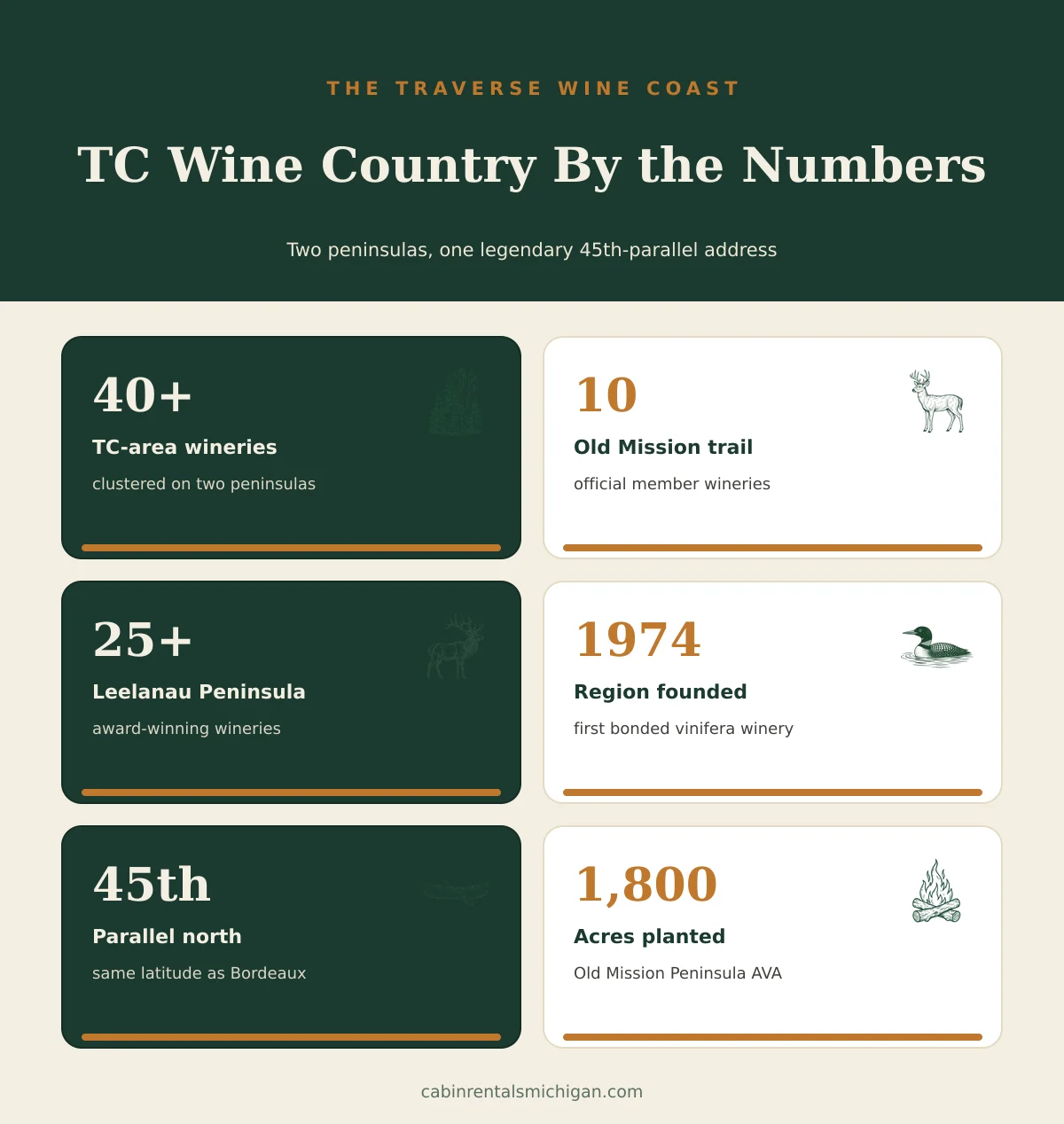
The traverse city wineries scene is one of the quiet surprises of a Great Lakes vacation: two gorgeous peninsulas, more than 40 tasting rooms within a short drive of downtown, and a growing reputation for Riesling and Pinot Noir that serious wine lovers take very seriously. This guide covers everything you need to plan a wine trail day on the Old Mission Peninsula and the Leelanau Peninsula — from the oldest bonded winery in Northern Michigan to the sparkling-only producer hiding among the apple orchards. For a broader look at what the city offers, see our complete guide to things to do in Traverse City.
Why Traverse City Is Michigan's Wine Capital
The short answer is latitude and water. Both the Old Mission Peninsula and the Leelanau Peninsula sit on the 45th parallel north — the same line that runs through Bordeaux, France and Piedmont, Italy. More importantly, Grand Traverse Bay and Lake Michigan wrap around these peninsulas on all sides, moderating temperatures so dramatically that frost arrives weeks later in fall than it does just a few miles inland. That extra hang time on the vine is what lets Riesling and Chardonnay reach full ripeness in a state most people don't think of as wine country at all.
The region's story began in 1974, when Edward O'Keefe Jr. planted the first vinifera vines at what would become Chateau Grand Traverse. When the winery earned its bond in 1976, it was the first in Northern Michigan to produce wines from European grape varieties — a genuine pioneer move that opened the door for everyone who followed. Today about 40 of Michigan's roughly 150 wineries are clustered in this corner of the state, concentrated on two narrow peninsulas that together cover less than 40 miles of road.
The Old Mission Peninsula Wine Trail
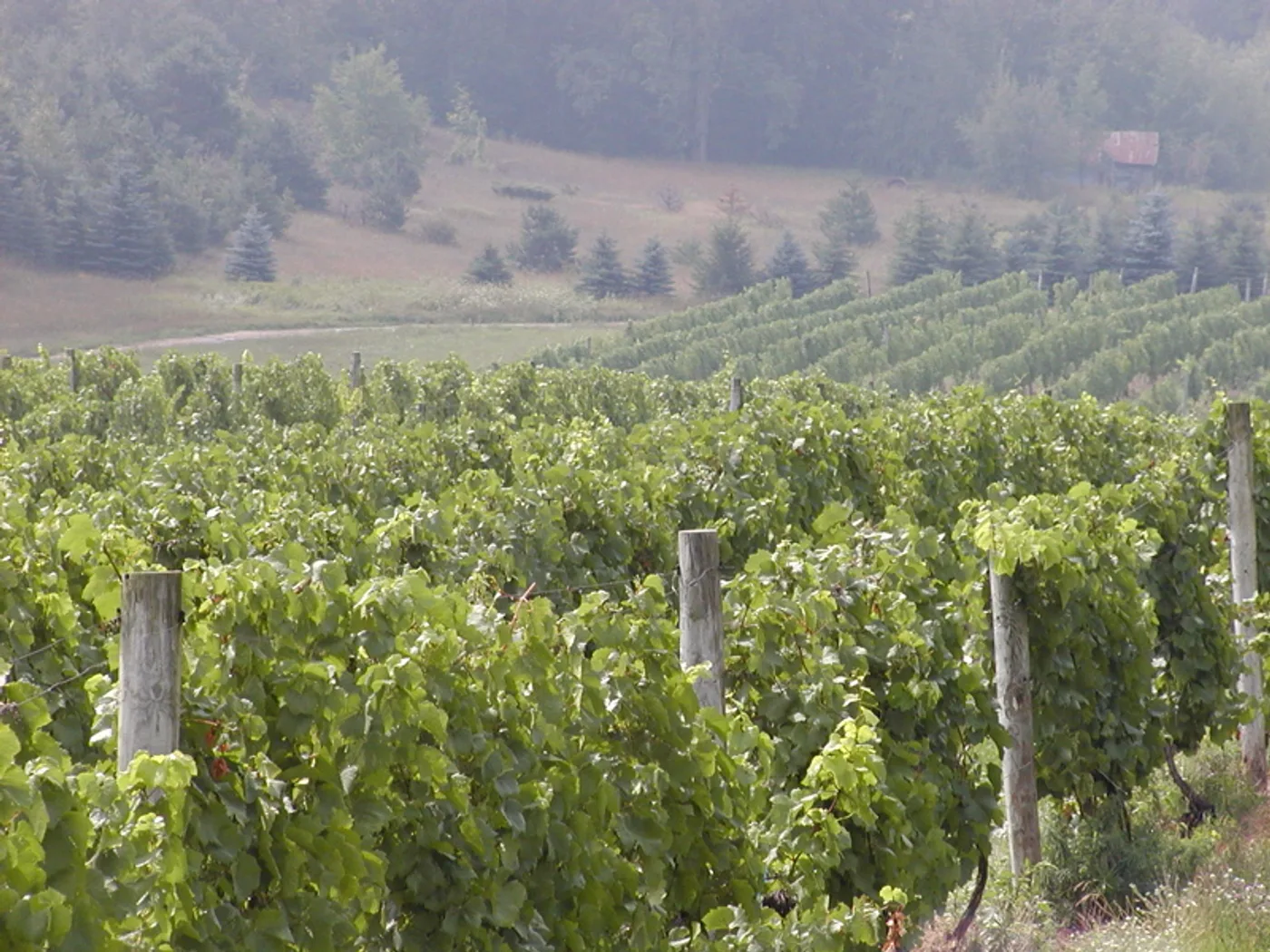
The Old Mission Peninsula juts 18 miles north into Grand Traverse Bay, splitting it into the warmer, shallower East Bay and the deeper West Bay. Peninsula Drive winds through cherry orchards and vineyard blocks the entire length, with tasting rooms appearing every mile or two. The official Old Mission Peninsula Wine Trail counts 10 member wineries, and most are within easy reach of one another — a half-day circuit can realistically cover three or four stops without feeling rushed.
Chateau Grand Traverse is the region's founding estate, and it still produces some of the most consistent Riesling in the state. The tasting room sits in a proper château building with sweeping bay views, and the on-site inn makes it easy to turn a wine-trail day into an overnight. A flight here typically opens with the dry Riesling and works up through late-harvest styles — a useful education in just how much range the variety has.
Chateau Chantal, about 12 miles north of downtown, is another château-style property with an 11-room bed and breakfast and views of both bays simultaneously — one of the few spots on the peninsula where you can see water on both sides from the same terrace. The sparkling Brut rosé is a regular highlight, and the estate hosts frequent concert and sunset events through summer.
Brys Estate Vineyard and Winery is the largest contiguous estate on Old Mission, spanning 155 acres, with a handsome tasting barn and a serious focus on single-vineyard wines. The Pinot Gris and estate Cab Franc regularly collect medals. Reservations are recommended in peak season. Mari Vineyards, also on Old Mission, is worth a stop for its underground barrel cave and adventurous blends that push the peninsula's limits. Peninsula Cellars occupies a converted one-room schoolhouse and tends to pour friendly, approachable wines at prices that won't make you wince.
The Leelanau Peninsula Wine Trail
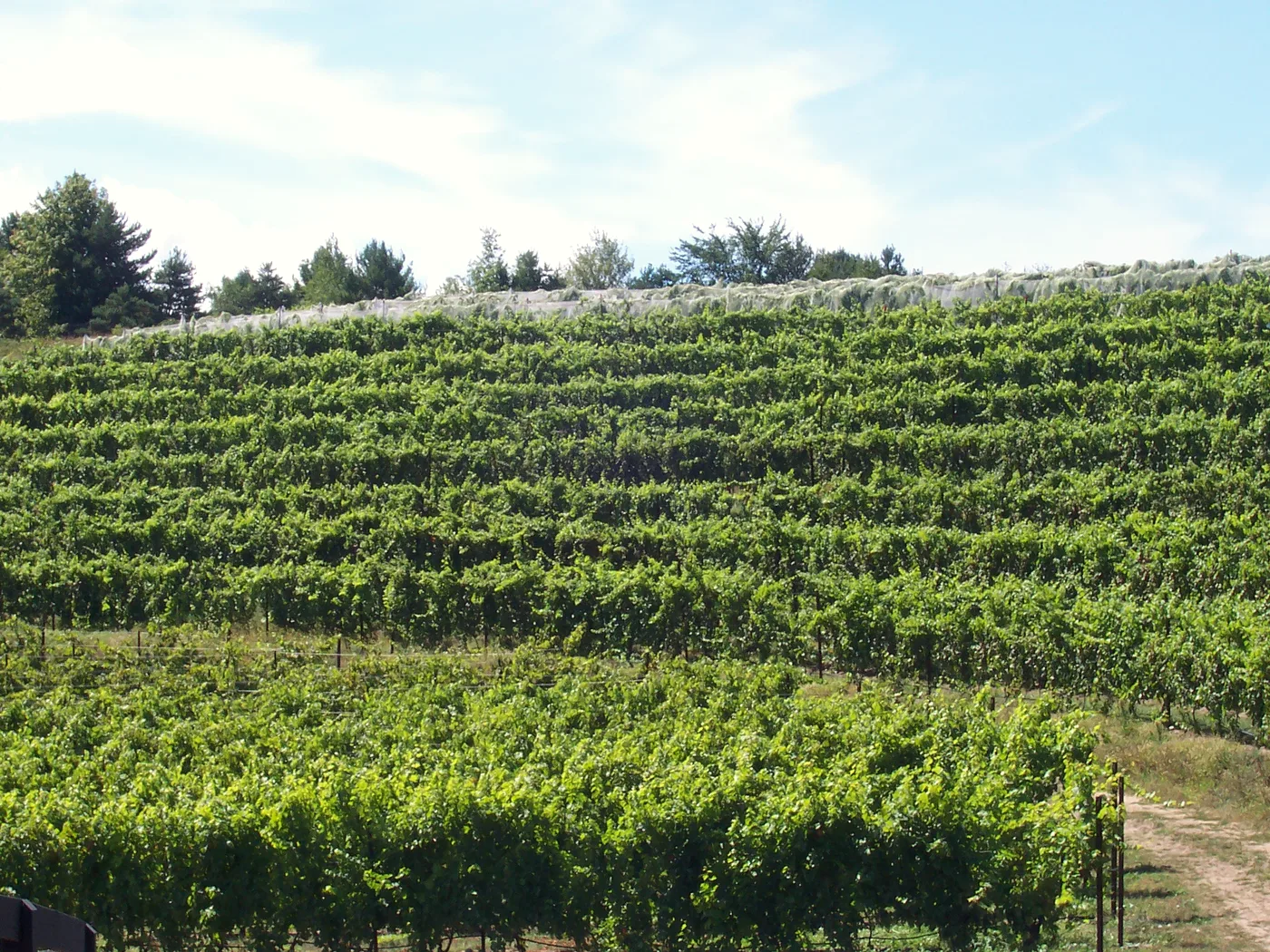
The Leelanau Peninsula stretches northwest of Traverse City and is home to more than 25 wineries, making it the larger of the two wine trails by a good margin. The terrain is hillier and the producers more varied — you'll find everything from a bubbly-only specialist to a full agricultural estate with a distillery, an inn, and a creamery all on the same property. A day on Leelanau tends to feel a bit more rural and exploratory than Old Mission, with more road time between stops and more payoff for the effort.
Black Star Farms is the anchor of the Leelanau trail and one of the most complete agritourism destinations in Michigan. Beyond the winery, the property includes an inn, a distillery producing fruit brandies and eau de vies, a creamery, and an artisan market. Three miles of trails wind through the property. The wines range widely — from a fruit-forward Pinot Noir to an ice wine that makes a compelling case for cold-climate Michigan winters.
L. Mawby (now operating as Mawby Sparkling Wines) focuses entirely on bubbles and has done so for decades, making it one of the longest-running sparkling wine producers in the Midwest. If you want to understand what Michigan terroir tastes like without wood and extraction getting in the way, a flight of Mawby sparkling wines is the clearest introduction. The property is a short drive from Shady Lane Cellars.
Shady Lane Cellars operates from a transformed 100-year-old fieldstone chicken coop — easily one of the most charming tasting rooms in the state. Set on a hillside with a relaxed outdoor pavilion, it specializes in estate-grown Pinot Noir and Chardonnay and pours them without fanfare. Live music appears on summer weekends. Explore more of the region's food and drink scene in our Food & Drink guides.
Planning Your Winery Day
Both trails are driveable in a day, but trying to hit both in one go is a recipe for a rushed afternoon. Most visitors pick one peninsula per visit and do it properly. Old Mission is slightly easier to navigate (one main road out and back); Leelanau involves more branching county roads and rewards a slower pace.
When to go: Summer (July–August) brings the full tasting room experience, outdoor events, and long evenings on vineyard terraces. Fall is arguably the best time — harvest runs from late August through October, the foliage along Peninsula Drive turns spectacular, and tasting room lineups tend to feature the current vintage alongside older library wines. Spring (May–June) is quieter and often sees reduced hours, so call ahead. Winter hours are limited but not zero, and a few wineries serve mulled wine and host cozy indoor events.
Tours vs. self-driving: Several operators run guided wine tours that handle the driving — Grand Traverse Rides and Magic Shuttle Bus both cover Old Mission and Leelanau routes, with pickup from downtown TC hotels. If you prefer to go at your own pace, designate a driver or use a rideshare for the return. Peninsula Drive and the county roads on Leelanau are not well served by rideshare once you're north of town, so plan accordingly.
- Old Mission Peninsula Wine Trail — ompwinetrail.com
- Leelanau Peninsula Wine Trail — lpwines.com
- Chateau Grand Traverse history — cgtwines.com
- Old Mission Peninsula AVA — Wine Folly Michigan guide
Where to Stay Near the Vineyards
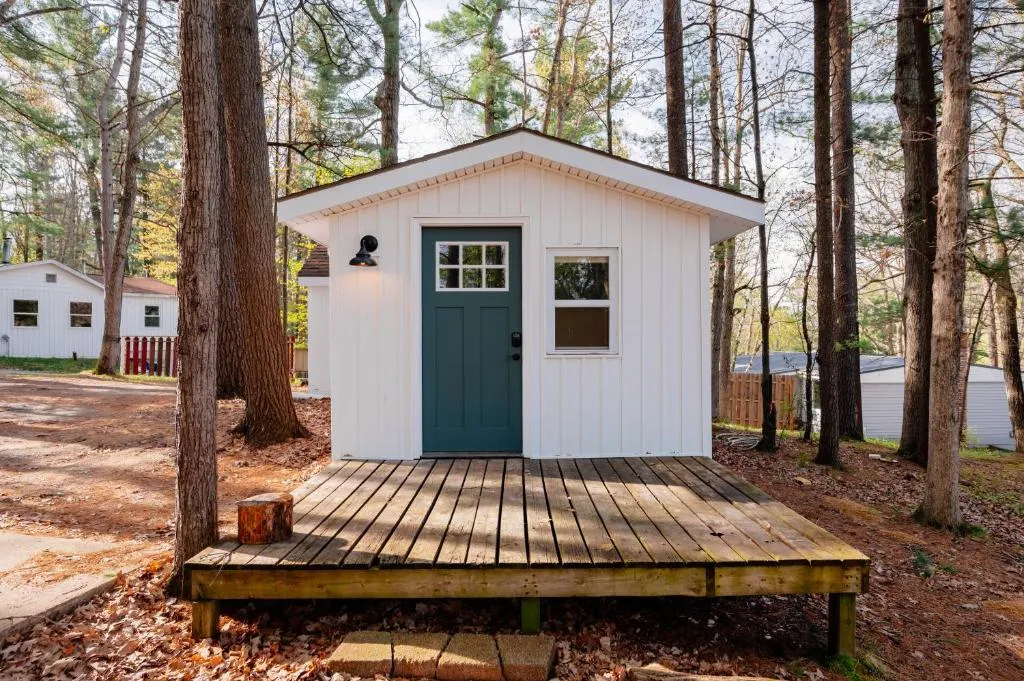
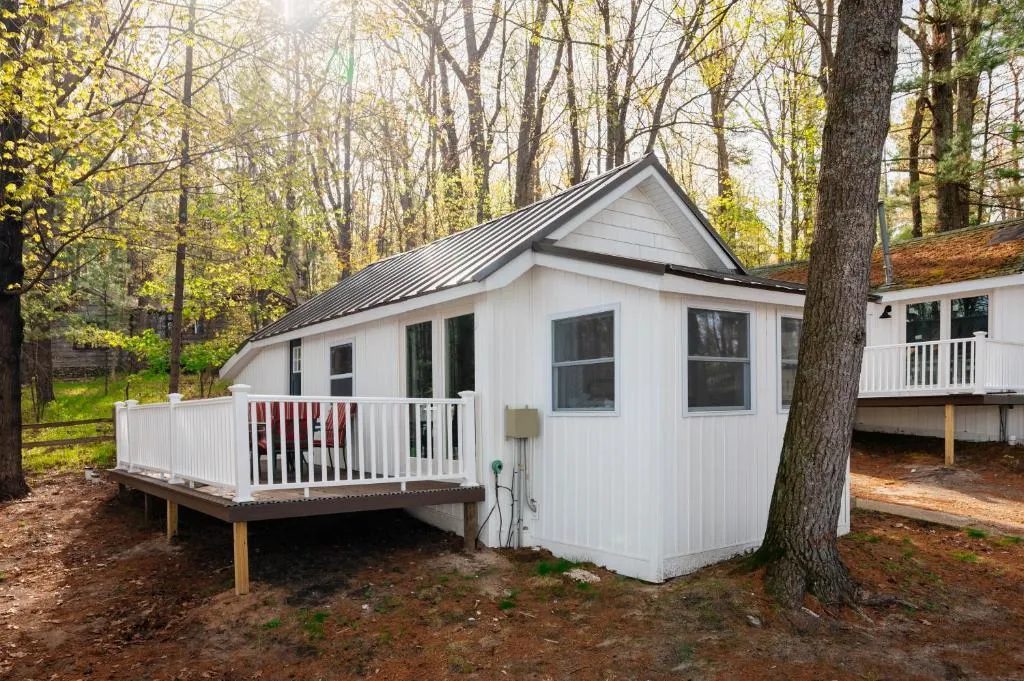
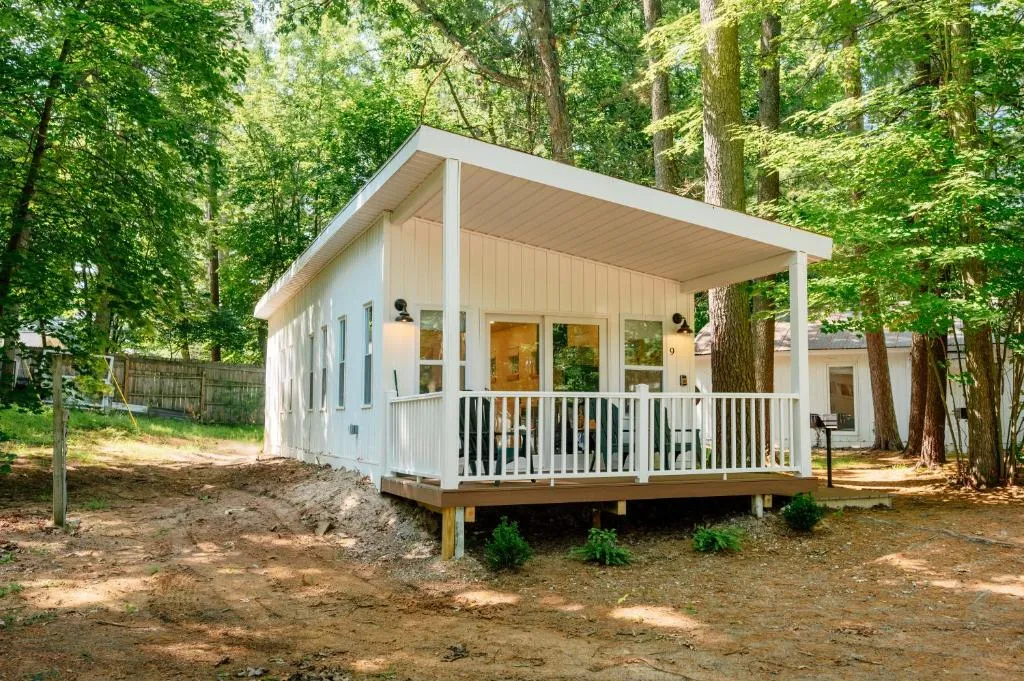
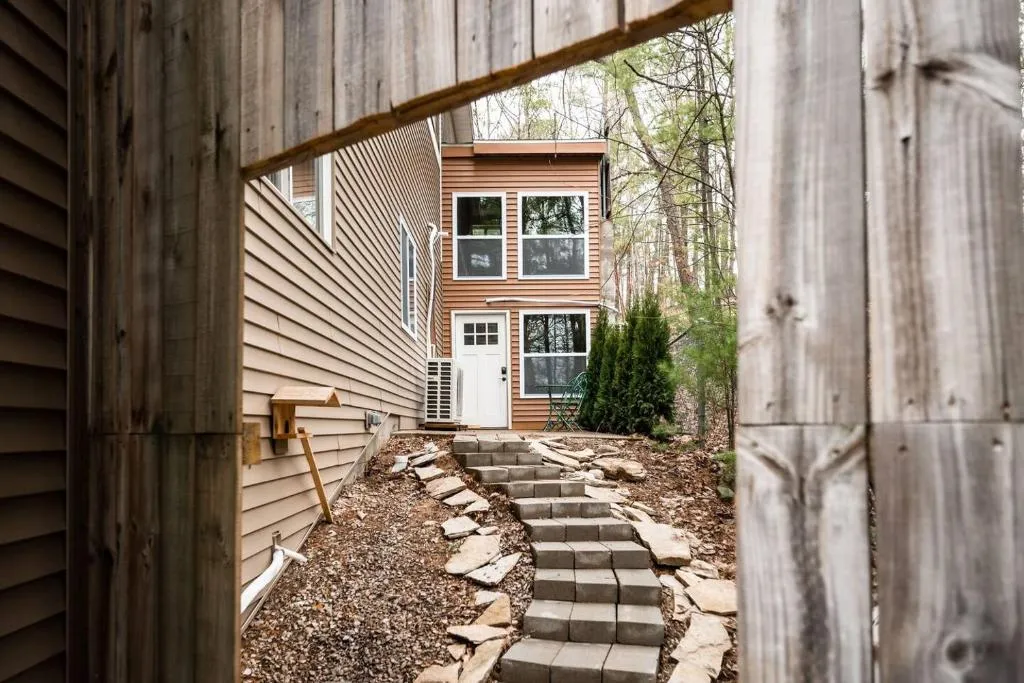
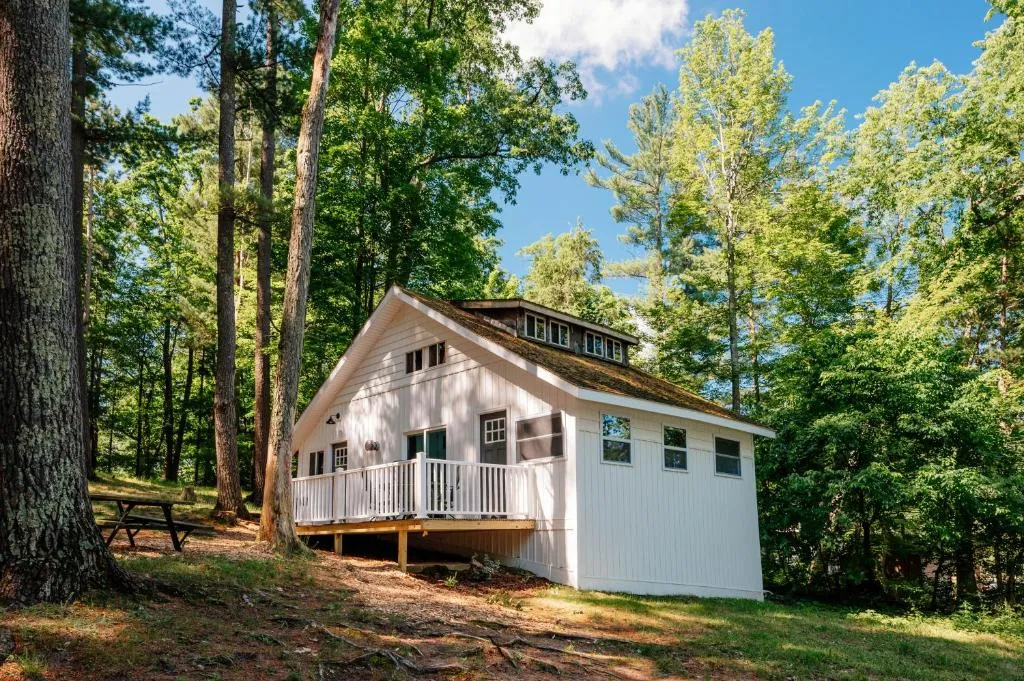
The cabin rentals closest to the wine trails sit on private inland lakes south and east of town — Arbutus Lake and Spider Lake. You get your own lakefront dock and a 15-to-20-minute drive to either peninsula trailhead, which is the right balance between wine-country proximity and a peaceful place to land at the end of the day. Browse cabins near Traverse City wineries and filter by the features that matter to you.
Find Your Wine-Country Base
Browse Traverse City cabin rentals — lakefront retreats on Arbutus Lake and Spider Lake, most within 20 minutes of Old Mission and Leelanau trailheads.
Frequently Asked Questions
Is Traverse City known for wineries?
Yes — Traverse City is Michigan's leading wine destination, with more than 40 tasting rooms concentrated on the Old Mission and Leelanau peninsulas. The region has earned recognition for cool-climate Riesling, Pinot Gris, and Pinot Noir produced along the 45th parallel.
How many wineries are on the Old Mission Peninsula?
The Old Mission Peninsula Wine Trail has 10 official member wineries, including Chateau Grand Traverse, Chateau Chantal, Brys Estate, Mari Vineyards, and Peninsula Cellars. Most are accessible via Peninsula Drive within a 20-minute drive of downtown Traverse City.
What is the oldest winery on Old Mission Peninsula?
Chateau Grand Traverse is the oldest winery on Old Mission Peninsula, founded in 1974 by Edward O'Keefe Jr. It became Northern Michigan's first bonded winery in 1976 and is credited with proving that European vinifera grapes could thrive in the region.
How many wineries are on the Leelanau Peninsula?
The Leelanau Peninsula is home to more than 25 wineries, making it the larger of the two wine trails near Traverse City. Notable stops include Black Star Farms, L. Mawby (sparkling wines), and Shady Lane Cellars.
Where can I find the best wine tasting in Traverse City?
For a full tasting-room experience, head to Old Mission Peninsula for estate-focused Riesling and Chardonnay, or to Leelanau Peninsula for more variety, including sparkling wines at L. Mawby and agritourism at Black Star Farms. Several guided tour operators run shuttles from downtown TC so you don't have to drive.
Is there a sunset wine tour available in Traverse City?
Yes — several tour operators offer evening and sunset wine tours on Old Mission Peninsula, where tasting room terraces overlook Grand Traverse Bay. Chateau Chantal and Chateau Grand Traverse both have views that face west and are particularly scenic at golden hour. Book in advance for summer evenings.