Quick Navigation
- The Michigan Inland Waterway
- Things to Do in Indian River
- Mullett Lake and Burt Lake
- Where to Stay in Indian River
- Stay on the Inland Waterway
- Getting to Indian River
- Frequently Asked Questions
- What is the Michigan Inland Waterway?
- What is Indian River, Michigan known for?
- What is there to do in Indian River, Michigan?
- How long does it take to boat the Michigan Inland Waterway?
- Is Burt Lake or Mullett Lake bigger?
- What fish are in Burt Lake?
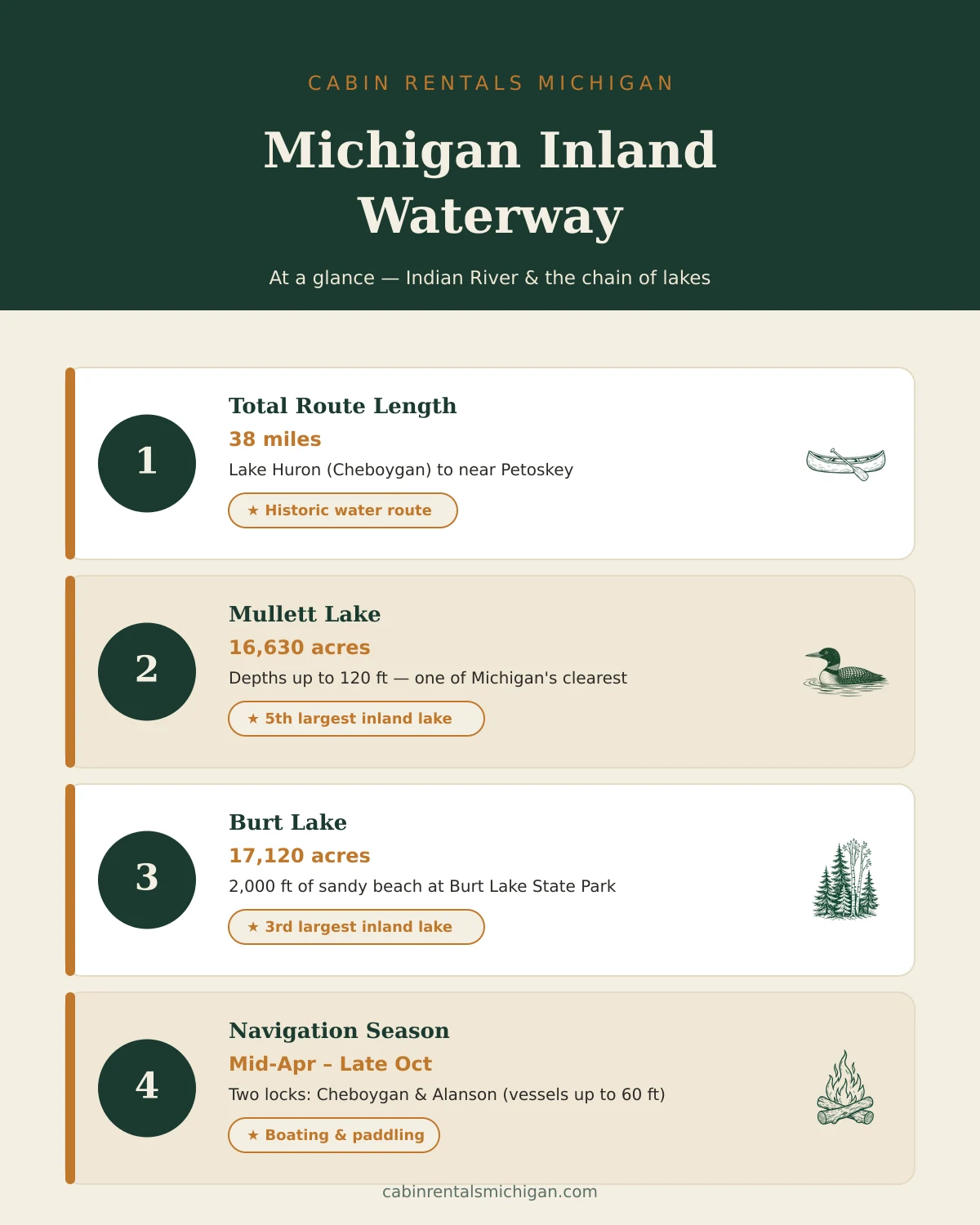
If you're searching for indian river michigan and wondering whether the little town in the northern Lower Peninsula is worth the drive, the short answer is yes — but not because of the town itself. Indian River earns its reputation as the gateway to the Michigan Inland Waterway, a 38-mile chain of rivers and lakes that stretches from Cheboygan on Lake Huron westward to Conway near Petoskey. The waterway strings together Mullett Lake, the Indian River channel, Burt Lake, Crooked Lake, and the Crooked River in one navigable corridor — and Indian River sits right at the heart of it.
That position makes it one of the most underrated boating destinations in the northern Lower Peninsula. While Traverse City gets the spotlight and Petoskey draws the boutique crowd, Indian River quietly fills up every summer with anglers, kayakers, pontoon renters, and families who discovered years ago that you can spend a full week on the water here and barely repeat yourself.
The Michigan Inland Waterway
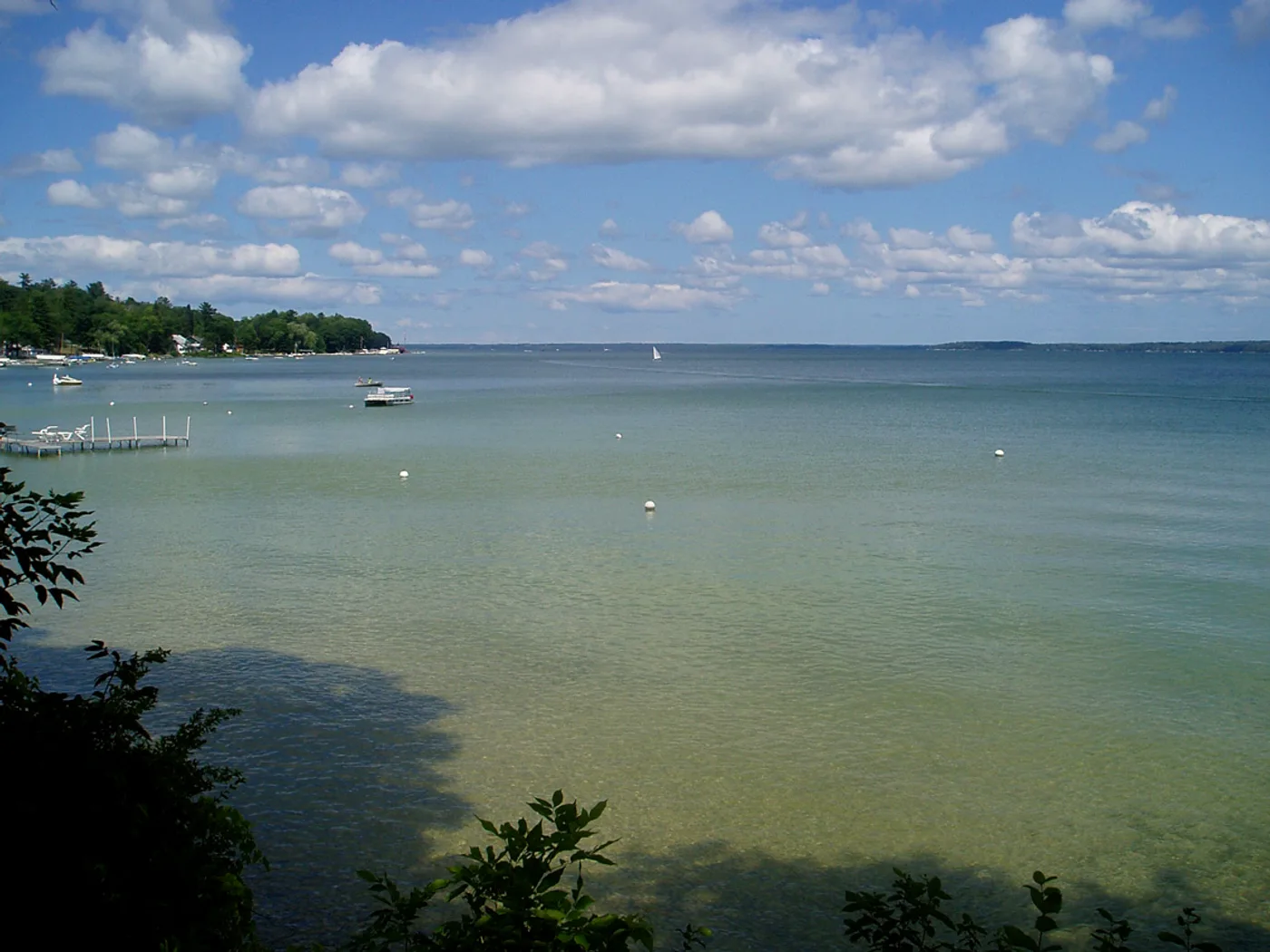
The Michigan Inland Waterway dates to long before European settlement. The Ottawa and Chippewa peoples used the connected lakes and rivers as a travel corridor between Lake Huron and the waters to the west. French voyageurs followed the same route during the fur-trade era, and by the late 1800s it had become a passenger steamship route connecting communities along the chain.
Today it's a recreational corridor. Powerboats, pontoons, kayaks, and canoes all share the water, with the navigable channel wide enough for most vessels throughout the main lakes. The locks at Cheboygan let boats cross between the inland waterway and Lake Huron, giving longer-range boaters access to the Straits of Mackinac roughly 15 miles north.
The two anchor lakes — Mullett and Burt — are genuinely large bodies of water. Mullett Lake covers roughly 16,630 acres with depths reaching up to 120 feet, making it one of Michigan's clearer cold-water lakes. Burt Lake is slightly bigger, at around 17,120 acres, with a maximum depth of about 73 feet. Both offer excellent fishing, swimming, and open-water sailing. Indian River sits between them, connected to Burt Lake by the Crooked River to the west and to Mullett Lake by the Indian River channel to the east.
Things to Do in Indian River
The town itself is small — a few thousand residents, a handful of restaurants, bait shops, and marina services along US-27. What it does well is serve as a launch point. Most visitors base here and fan out daily to the lakes, trails, and attractions nearby.
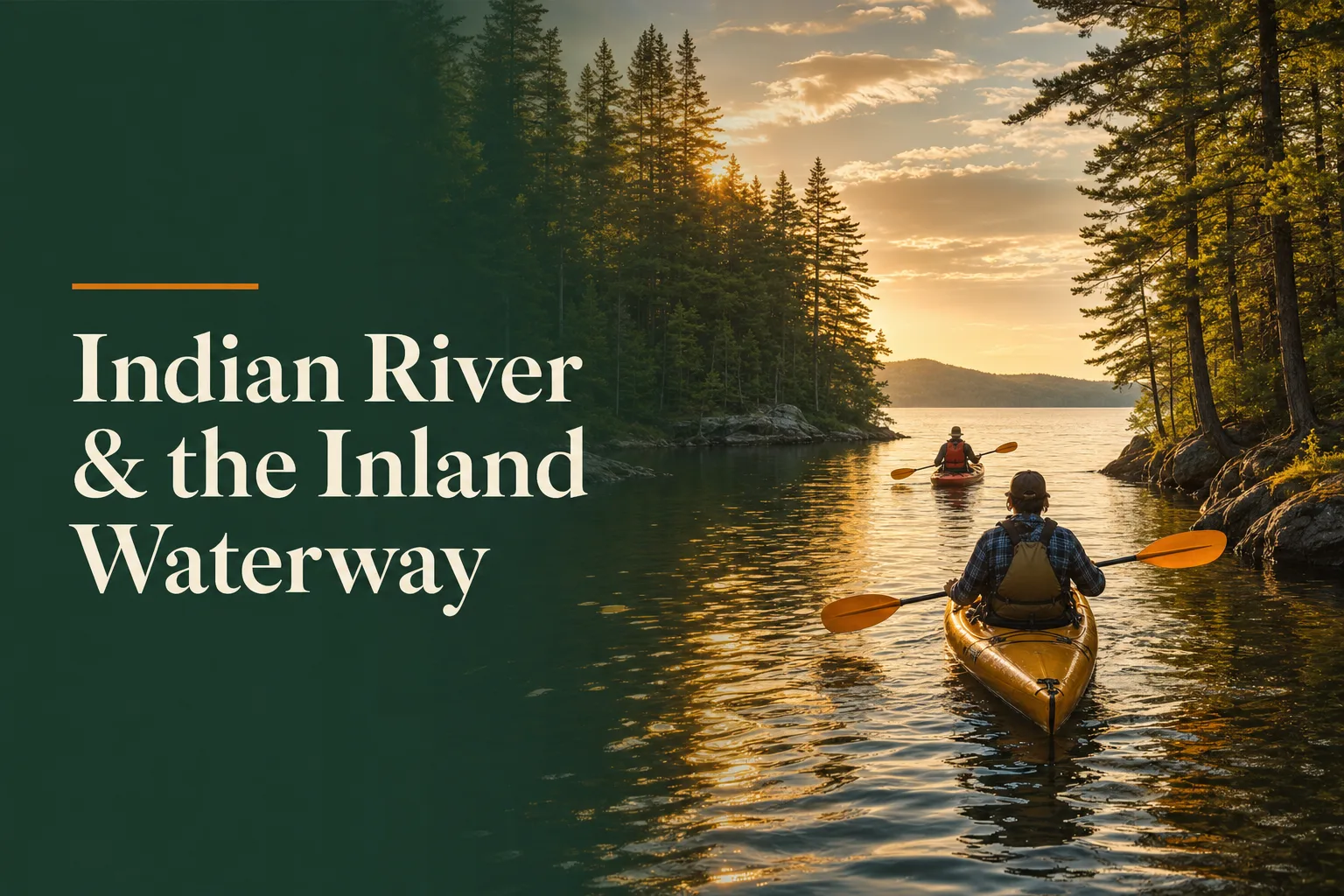
Boating and paddling are the main draw. Rental outfitters near the waterway offer pontoons, kayaks, and canoes by the hour or day. The gentle current of the Indian River channel between Mullett and Burt Lakes is an easy paddle for beginners, while the open lakes suit motorized craft and sailors. The full 38-mile run from Cheboygan to Conway is a multi-day trip for experienced boaters; most day visitors stick to one lake or the connecting rivers.
Fishing is exceptional. Walleye, northern pike, smallmouth bass, and yellow perch are all present in the chain. Mullett Lake is known for walleye and lake trout. Burt Lake draws ice-fishing crowds every winter alongside the summer anglers. For a full overview of what's biting across the region, see the Northern Michigan fishing guide. If you enjoy paddling other Michigan rivers too, the Au Sable River kayaking corridor is about 90 minutes southeast and offers a completely different river experience worth pairing on a longer trip.
The Cross in the Woods is a well-known landmark on M-68 just west of town. The outdoor shrine features a 55-foot crucifix — the bronze figure was sculpted by Michigan artist Marshall Fredericks — and draws visitors from across the region throughout the summer. A small museum and gift shop are on site.
Cheboygan State Park, about 20 miles north at the end of the waterway, offers swimming beaches, hiking trails, and access to Mullett Lake's northern shore. The park also sits adjacent to the Cheboygan River, which feeds into Lake Huron.
Mullett Lake and Burt Lake
These two lakes are the reason most visitors come. Mullett Lake is the smaller of the two but deeper and clearer — excellent for swimming off a dock and for the kinds of game fish that prefer cold, well-oxygenated water. The lake runs about 10 miles long and up to 3 miles wide; boaters can easily spend a morning exploring its shoreline without doubling back.
Burt Lake State Park, on the southern shore of Burt Lake, is the region's busiest campground and beach. The sandy swim beach is one of the finest in the northern Lower Peninsula, shallow enough for young children and protected enough to be calm on most summer days. A boat launch at the park makes it easy to access the full lake.
Both lakes warm up well by late June. Water temperatures in July and August typically reach the mid-70s Fahrenheit in the shallows, making them genuinely comfortable for extended swimming. The clear water and sandy bottoms add to the experience — this isn't the stained tannic water you find in some northern Michigan bog lakes.
Where to Stay in Indian River
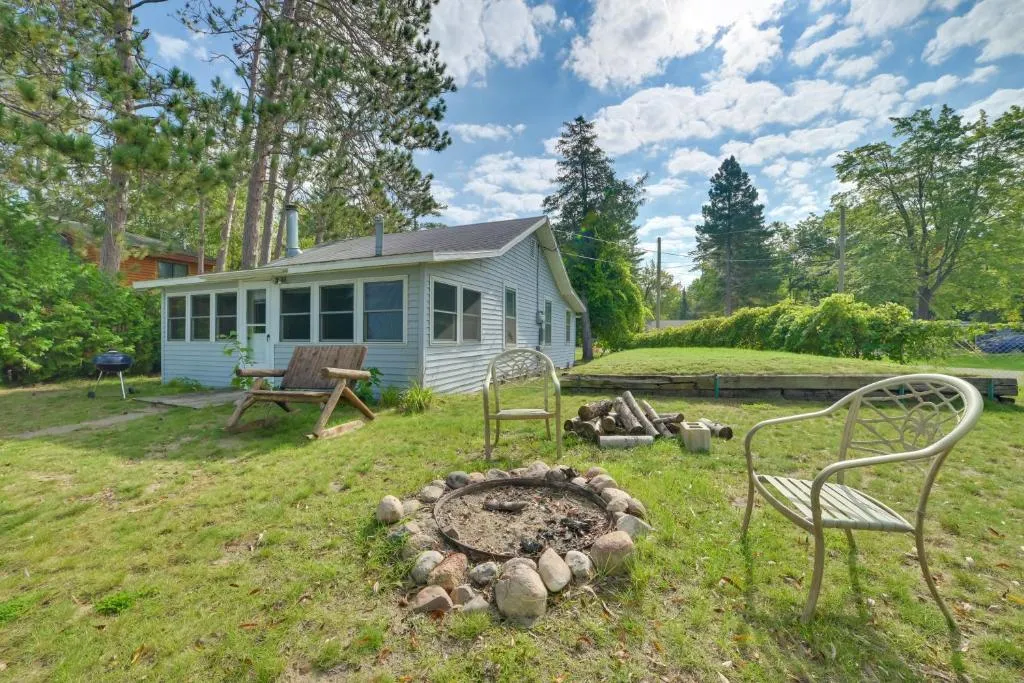
Accommodations around Indian River range from campsites at the state parks to lakefront vacation homes on Mullett and Burt Lakes. The only Booking.com-listed cabin on Mullett Lake sits right on the water with a private dock — a five-bedroom, pet-friendly property ideal for a group or family that wants to arrive and get on the water immediately.
Stay on the Inland Waterway
Browse lakefront options and waterway-access properties for your Indian River trip.
View Indian River cabinsGetting to Indian River
Indian River sits on I-75 about 30 miles south of the Mackinac Bridge and roughly 45 miles northeast of Gaylord. From Detroit the drive is about 4.5 hours north on I-75; from Grand Rapids it's about 3 hours northeast via US-131 to M-32. The town is small enough that you'll want a car — there's no meaningful public transit and the lakes and attractions are spread along a 20-mile corridor. Budget extra time in July and August when I-75 traffic through Gaylord and Gaylord-to-Mackinac slows on Friday afternoons.
Frequently Asked Questions
What is the Michigan Inland Waterway?
The Michigan Inland Waterway is a 38-mile navigable water route linking Cheboygan on Lake Huron to Conway near Petoskey. It threads through the Cheboygan River, Mullett Lake, the Indian River channel, Burt Lake, Crooked Lake, and the Crooked River. Two locks — at Cheboygan and Alanson — help boats navigate the route.
What is Indian River, Michigan known for?
Indian River is best known as the central hub of the Michigan Inland Waterway and as the home of the Cross in the Woods shrine, one of Michigan's most visited religious sites. The town draws anglers, boaters, and families who use it as a base for exploring Mullett Lake and Burt Lake.
What is there to do in Indian River, Michigan?
Popular activities include boating and kayaking on the Inland Waterway, fishing for walleye and bass on Mullett and Burt Lakes, visiting the Cross in the Woods on M-68, swimming at Burt Lake State Park beach, and day-tripping north to Cheboygan and the Straits of Mackinac.
How long does it take to boat the Michigan Inland Waterway?
The full 38-mile run from Cheboygan to Conway takes roughly one long day for a motorized boat, though most boaters break it into a two-day trip with an overnight stop. Paddlers typically spread the route over four to six days depending on pace and how much time they spend exploring each lake.
Is Burt Lake or Mullett Lake bigger?
Burt Lake is slightly bigger, at approximately 17,120 acres compared to Mullett Lake's roughly 16,630 acres. However, Mullett Lake is deeper — up to 120 feet — and is known for its clear water and good cold-water fishing, particularly lake trout and walleye.
What fish are in Burt Lake?
Burt Lake supports walleye, yellow perch, northern pike, smallmouth bass, and panfish. It's a productive four-season fishery — summertime trolling for walleye is popular, and the lake draws a steady ice-fishing crowd each winter when the ice is thick enough to support shanties.
- Michigan DNR — Burt Lake State Park: michigan.gov
- Michigan Water Trails — Inland Waterway: michiganwatertrails.org
- Cheboygan County Tourism: visitcheboygan.com