
Quick Navigation
- When Fall Color Peaks Up North
- The Tunnel of Trees on M-119
- Pierce Stocking Scenic Drive and the Sleeping Bear Overlooks
- M-22 Around the Leelanau Peninsula
- Old Mission Peninsula and the M-37 Ridge
- River Road and the Au Sable Bluffs
- Gaylord, Elk Country and the Rut
- Planning Your Color Tour
- Where to Stay for Peak Color
- Book a cabin for peak color
- Frequently Asked Questions
- When to see fall colors in northern Michigan?
- What is the best week for fall colors?
- What are the best towns to visit in Michigan for fall colors?
- Where are the best fall colors near Traverse City?
- Why do leaves sometimes change early in Michigan?
- Do I need to book a cabin in advance for peak color?
This guide contains affiliate links. If you book a cabin through one of them we may earn a commission at no extra cost to you.
Northern Michigan fall colors arrive on their own schedule, and the difference between a good weekend and a great one is usually a matter of seven days. Get the timing right and the hardwood ridges above Lake Michigan turn every shade of scarlet, bronze and gold at once. Get it wrong and you are looking at bare maples and a lot of brown oak. This guide covers when color typically peaks up north, five drives worth building a weekend around, and how to book a cabin before the good ones go.
When Fall Color Peaks Up North
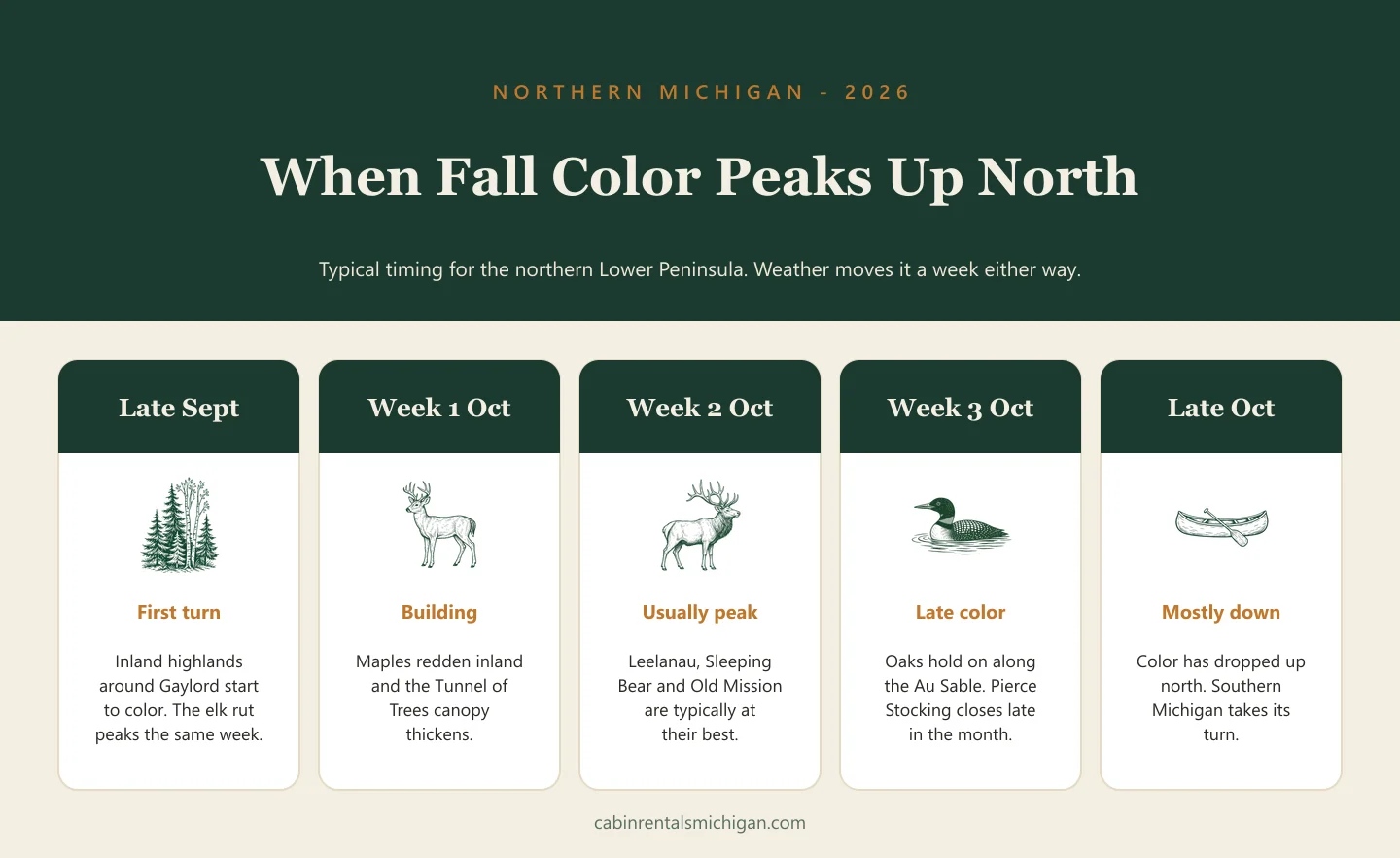
Across the northern Lower Peninsula, the useful rule is late September through the third week of October. Inland and higher ground turns first. The lakeshore runs a little later. Lake Michigan and Lake Huron hold summer warmth well into autumn, keeping the trees along the water green a few days longer than the ridges behind them.
Around Gaylord, leaves generally start to turn in the last week of September. The Leelanau Peninsula, Sleeping Bear and Old Mission usually hit their best in the second week of October. None of that is a promise. A dry August, an early frost or a warm, wet stretch can move the whole window a week in either direction. That is why the state publishes a live color map and a weekly color report through the season. Check one of those a few days before you drive.
Drive the color tours on a weekday if you possibly can. The Tunnel of Trees and Pierce Stocking both back up badly on peak-season Saturdays, and both are slow roads by design, so there is nowhere for the traffic to go.
The Tunnel of Trees on M-119
This is the drive most people mean when they talk about a Michigan fall color tour. M-119 runs north from Harbor Springs to Cross Village, roughly 20 miles of narrow, twisting pavement with hardwoods closing overhead. It is signed as the Tunnel of Trees Scenic Heritage Route and is one of the state's Pure Michigan Byways.
The road has no centerline along the tunnel section, and it is genuinely tight. There is no shoulder to speak of, blind curves, and a steep drop toward Lake Michigan on the west side. Take it slowly, use the marked pull-offs rather than stopping in the road, and plan on the drive taking far longer than the mileage suggests.
Pierce Stocking Scenic Drive and the Sleeping Bear Overlooks
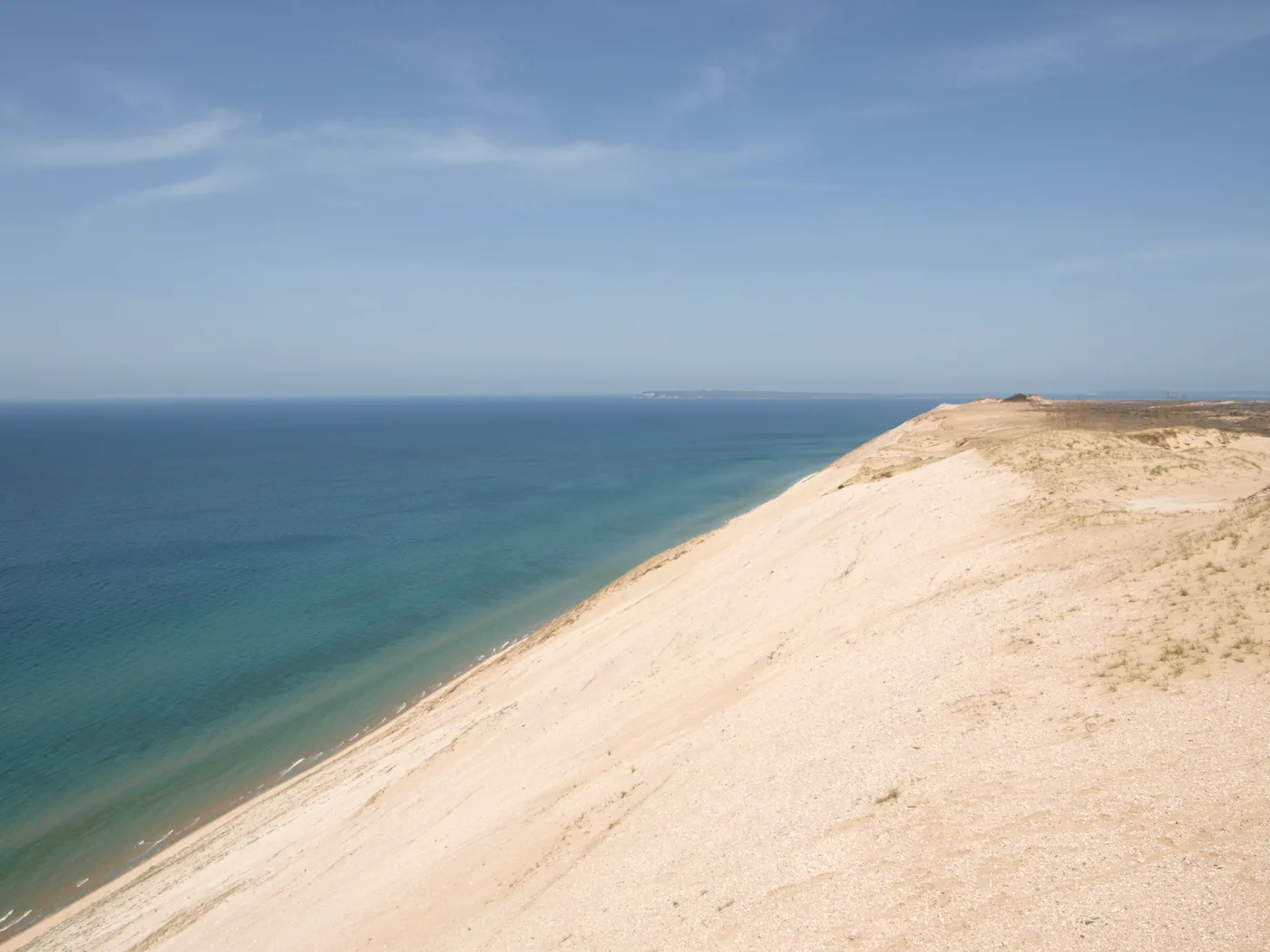
Inside Sleeping Bear Dunes National Lakeshore, the Pierce Stocking Scenic Drive is a 7.4-mile one-way loop with twelve numbered stops. The National Park Service reckons about two hours if you get out at every one, and that is a fair estimate once you factor in the boardwalks.
Stop nine is the Lake Michigan Overlook, where the dune falls away several hundred feet to the water and the Manitou Islands sit out on the horizon. The loop climbs through beech and maple on the way round, so the color and the big water are on the same drive.
One thing to plan around: the drive is seasonal. It generally opens in late May and closes to vehicles in late October, so a late-October trip can arrive to find the gate shut. It stays open to walkers and cyclists after that. If you would rather be on foot, the trails around the lakeshore are covered in our guide to the best hiking trails near Traverse City.
M-22 Around the Leelanau Peninsula
M-22 is the shoreline road that loops the Leelanau Peninsula, and it has become shorthand for this whole corner of the state. The full highway runs about 117 miles. The stretch that matters for a color tour is the northern portion, designated the Leelanau Scenic Heritage Route back in 2002. It threads between orchards, vineyards, Lake Michigan beaches and the villages of Leland, Northport and Suttons Bay.
It pairs naturally with Sleeping Bear, since M-22 runs straight through the national lakeshore. A full loop of the peninsula makes an easy day out of a cabin near Glen Arbor or Traverse City.
Old Mission Peninsula and the M-37 Ridge
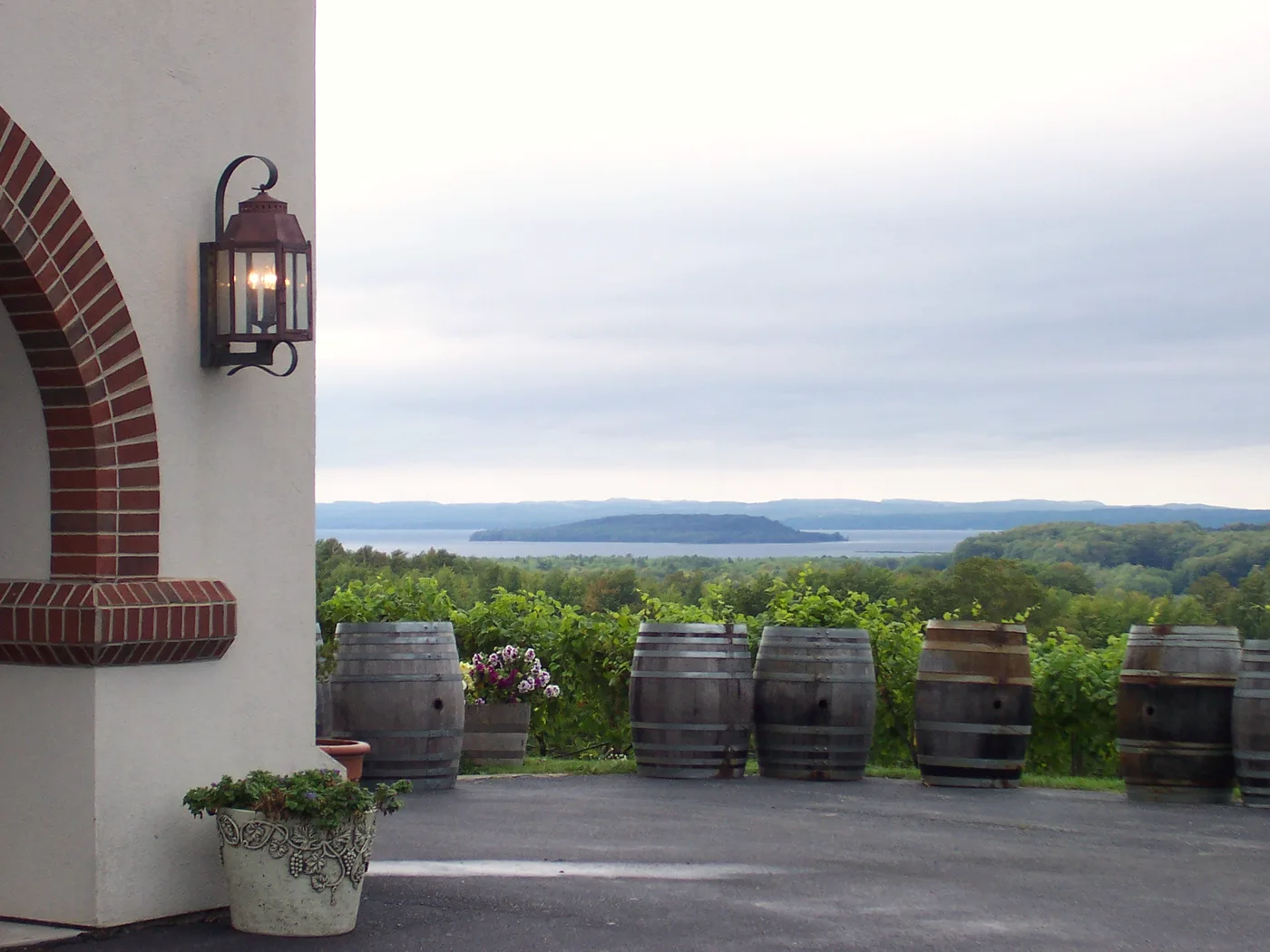
Old Mission is the narrow finger of land that splits Grand Traverse Bay. M-37 runs up its spine for about 18 miles, from Traverse City to the Mission Point Lighthouse at the tip. The lighthouse dates from 1870 and sits close to the 45th parallel, halfway between the equator and the North Pole.
The appeal here is the combination. You get water on both sides for most of the drive, vineyards and farm stands along the ridge, and hardwoods turning behind them. It is the shortest of these drives and the easiest to fit into a half day, which makes it a good option if the weather closes in. Cabins fill quickly through October, so it is worth lining up Traverse City fall getaways well before peak week.
River Road and the Au Sable Bluffs
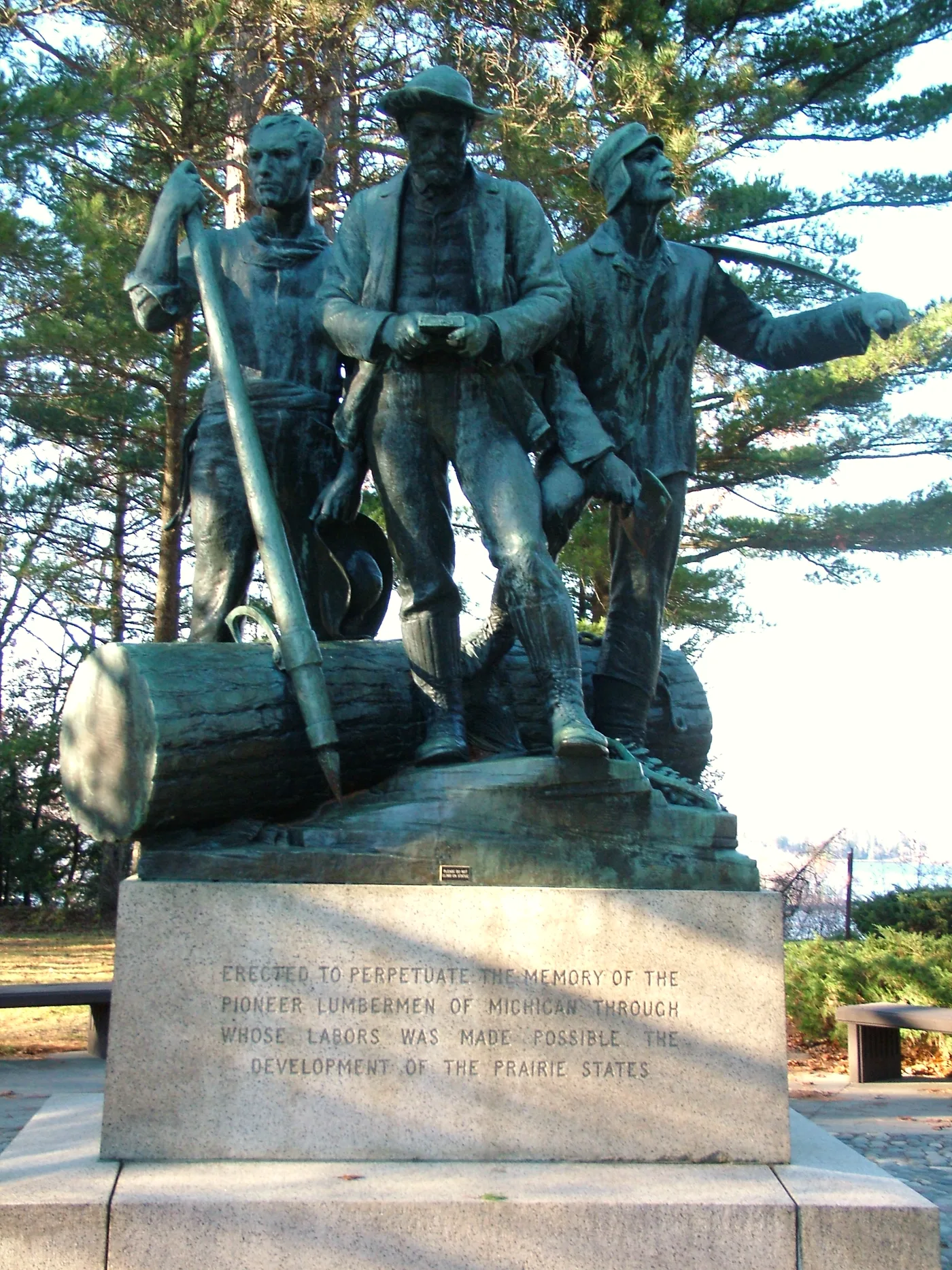
On the Lake Huron side, the River Road National Scenic Byway runs about 22 miles west from Oscoda along the bluffs above the lower Au Sable River. It is quieter than the Lake Michigan drives and the valley views are wide open.
The landmark stop is the Lumberman's Monument, a 14-foot bronze of three figures around a log: a timber cruiser with his compass, a sawyer with a saw over his shoulder, and a river rat resting on his peavey. It commemorates the men who cut the white pine that built much of the Midwest. Iargo Springs and the Highbanks Trail are close by, both with staircases and overlooks down toward the river.
Gaylord, Elk Country and the Rut
Gaylord sits high and inland, which is why its leaves turn earlier than the shoreline towns. It also puts you on the doorstep of the Pigeon River Country State Forest, about 105,000 acres known locally as the Big Wild.
This is elk country. Michigan's free-roaming herd numbers somewhere over a thousand animals, one of the largest east of the Mississippi, and the rut begins in early September and peaks around the twentieth. That is almost exactly when the first color arrives inland, so a late-September trip can give you both. Bulls bugle across the open grassy areas at dawn and dusk, which are also the best hours to see them. Stay in the car or at the marked viewing areas, keep your distance, and bring binoculars.
Michigan's elk are not a remnant population. The state's original elk were gone by about 1875, and today's herd descends from just seven animals brought from the western United States and released near Wolverine in 1918.
Base yourself here and you can drive to Hartwick Pines State Park in under half an hour. Its 49 acres of old-growth white pine are among the last uncut stands in Michigan. Some of the trees are over 300 years old and around 130 feet tall, reached on a paved 1.25-mile loop that suits every pair of legs. Pines do not change color, but they make a very good backdrop for the maples that do. Log cabins around Gaylord put all of this within easy reach.
Planning Your Color Tour
| Drive | Length | Base town | Best for |
|---|---|---|---|
| Tunnel of Trees (M-119) | ~20 miles | Harbor Springs | The classic canopy drive |
| Pierce Stocking Scenic Drive | 7.4-mile loop | Glen Arbor | Dune overlooks and big water |
| M-22, Leelanau | Full loop, a day | Traverse City | Villages, orchards, shoreline |
| Old Mission (M-37) | ~18 miles each way | Traverse City | A half day, water both sides |
| River Road Byway | ~22 miles | Oscoda | Quiet bluffs, fewer crowds |
Three practical notes. Book early, because peak-color weekends are the busiest of the autumn up north and the good cabins go months out. Go midweek if your dates are flexible. And build in a spare day, since color is weather-dependent and a single storm can strip a ridge overnight. More seasonal guides are collected under Seasons Up North.

Where to Stay for Peak Color
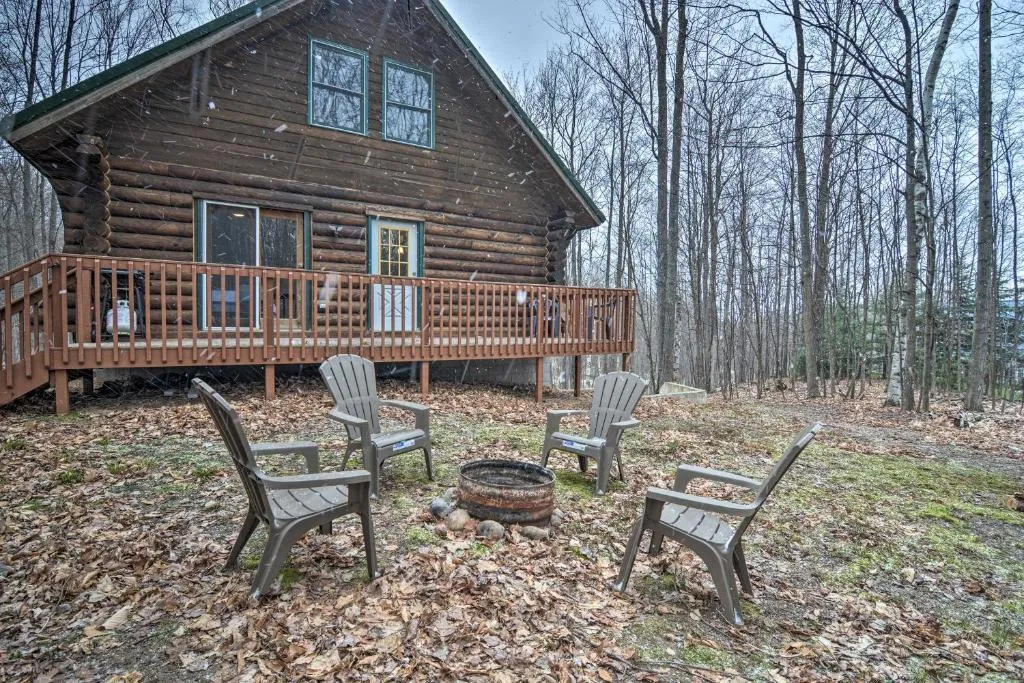
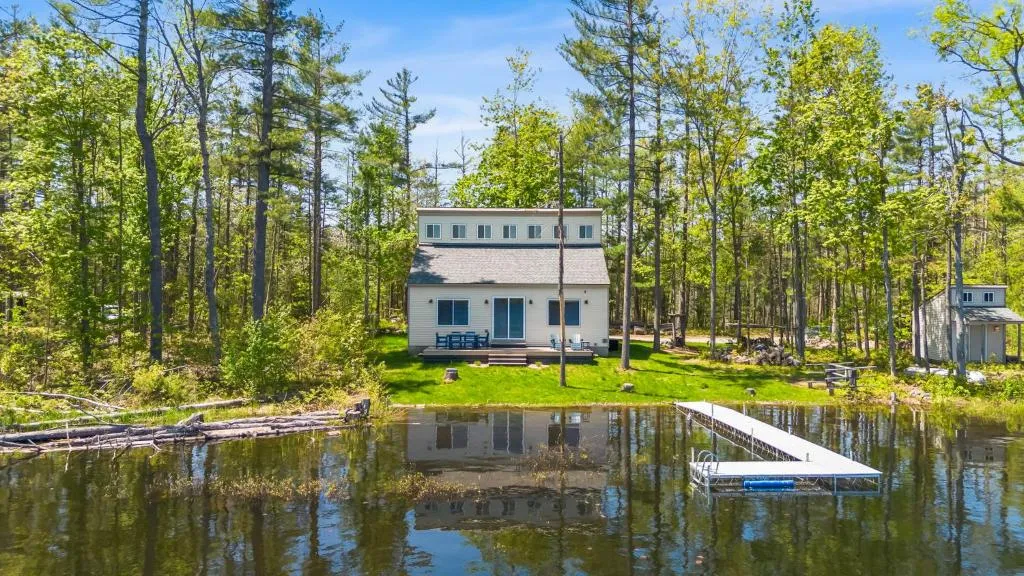
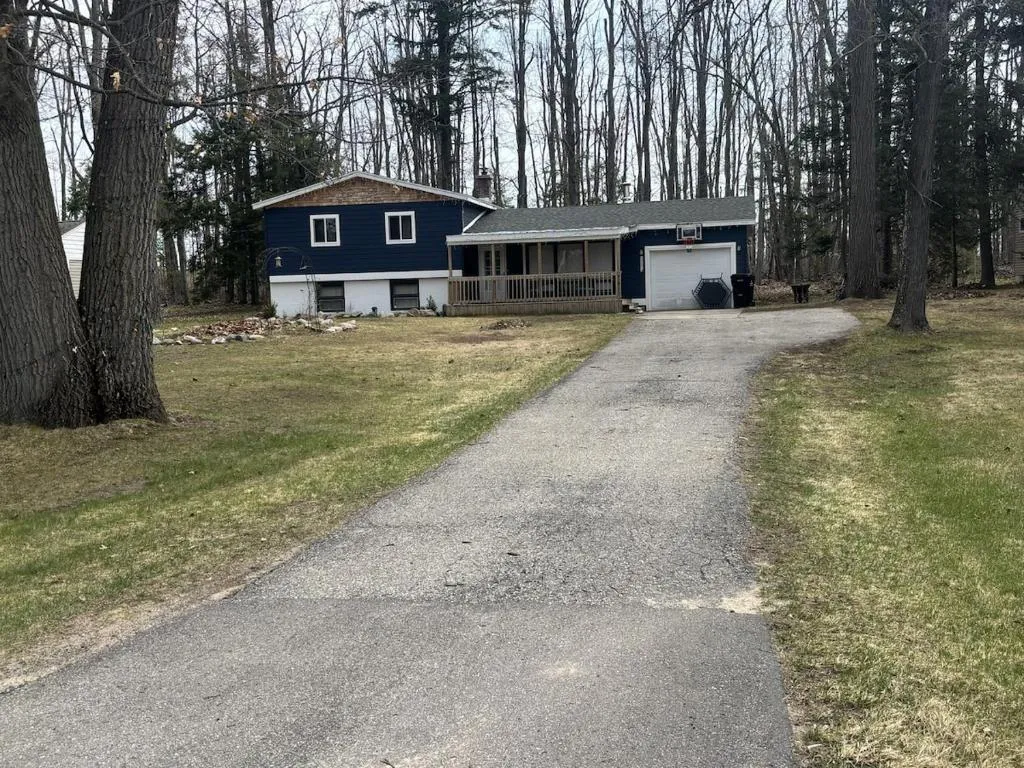
Gaylord works well as a color-tour base. It turns early, it sits between the Lake Michigan and Lake Huron drives, and it is the closest of our towns to both Pigeon River Country and Hartwick Pines. These cabins are a short drive from all of it.
Book a cabin for peak color
Browse every cabin, chalet and cottage we list around Gaylord, and check live dates on Booking.com.
See fall-color cabins in GaylordFrequently Asked Questions
When to see fall colors in northern Michigan?
Late September through the third week of October in most years. Inland areas such as Gaylord turn first, usually in the last week of September, while the Lake Michigan shoreline around Leelanau and Sleeping Bear tends to peak in the second week of October.
What is the best week for fall colors?
For the northern Lower Peninsula, the second week of October is the safest single bet. It is not guaranteed, though. Check the state's live fall color map and weekly color report a few days before you travel, because weather can shift peak by a week.
What are the best towns to visit in Michigan for fall colors?
Harbor Springs for the Tunnel of Trees, Glen Arbor for Sleeping Bear and Pierce Stocking, Traverse City for Old Mission and the Leelanau loop, Gaylord for early inland color and elk, and Oscoda for the quieter Au Sable bluffs.
Where are the best fall colors near Traverse City?
Old Mission Peninsula on M-37 is the quickest option, about 18 miles up the ridge with water on both sides. For a full day, loop the Leelanau Peninsula on M-22 and take in Sleeping Bear Dunes on the way round.
Why do leaves sometimes change early in Michigan?
Drought stress is the usual reason. A dry summer, or an early cold snap, pushes trees into shutting down sooner. Those years often bring a shorter, less vivid display, because stressed leaves tend to drop before the color fully develops.
Do I need to book a cabin in advance for peak color?
Yes. Peak-color weekends are among the busiest of the year up north, and cabins near the popular drives are commonly booked months ahead. Midweek stays are easier to find and the roads are much quieter.
- Pierce Stocking Scenic Drive length, stops and season: National Park Service
- Michigan elk history, the 1918 reintroduction and herd size: Rocky Mountain Elk Foundation
- Elk viewing in Pigeon River Country: Pigeon River Discovery Center
- Hartwick Pines State Park old-growth stand: Hartwick Pines State Park
- River Road National Scenic Byway and the Lumberman's Monument: River Road National Scenic Byway
- M-119 Tunnel of Trees Scenic Heritage Route: Emmet County